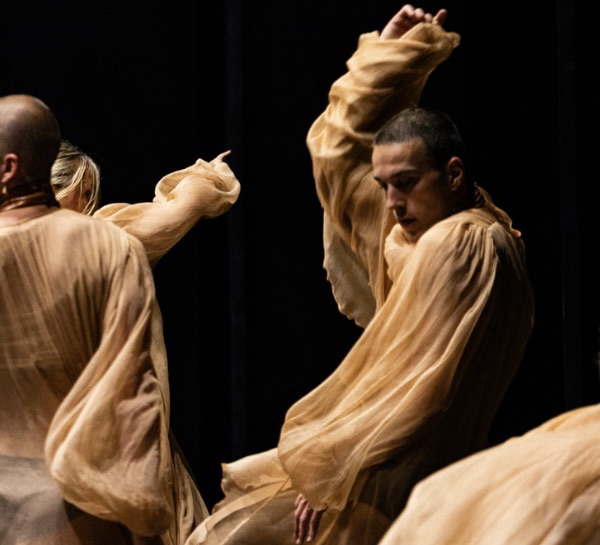
Inspired by Gustav Mahler’s Symphony No. 5, one of Mahler’s most famous works composed following a near-death experience, and his whirlwind romance with Alma Schindler, Emanuel Gat’s FIVE DAYS IN THE SUN moves from darkness to light, despair to joy and tension to release, in a journey through the emotional depths of Mahler’s Symphony.
We sat down with Emanuel to find out more!
Q: Tell us about yourself and your company.
A: I started working as a choreographer in 1994, and founded Emanuel Gat Dance in 2004. I’ve been based in France since 2007, and in Marseille since 2019. Over the years, I’ve developed a very personal relationship with music and with the choreographic process itself. I’m interested in choreography as a way of understanding things, of studying how people interact, how movement emerges, and how a group of individuals can develop something together that none of them could produce alone.
With Five Days in the Sun, we’re also beginning a new chapter for the company. We brought together twelve dancers from different backgrounds and parts of the world, all now based in Marseille. Building a new group is always an opportunity to question things again, to look at what choreography can be and what it can do. For me, the company is not simply a group of dancers performing my work. It’s a living environment in which the work happens, and the quality of what we do is directly connected to the quality of the relationships and the creative possibilities we establish together.
Q: What made you choreograph a dance work to Mahler’s Symphony No. 5? Were you inspired by any other choreographers who have done something similar?
A: It’s difficult to explain exactly why I choose a particular piece of music. It’s quite intuitive. Something catches my attention, creates a certain curiosity, and makes me want to spend time with it. Mahler’s Fifth has an extraordinary combination of qualities. There’s tremendous force, almost like a natural phenomenon, but at the same time there’s an incredible delicacy and vulnerability. I’m interested in that coexistence of things that might seem contradictory. The music has its own very precise architecture, but it’s also unpredictable, full of transformations and shifts in energy. It presents a fascinating choreographic problem.
I’m aware that Mahler’s Fifth, and particularly the Adagietto, has inspired many choreographers, but I didn’t approach the piece with the idea of doing something similar or different from anyone else. I’m not interested in illustrating the music, or in translating its emotional content into movement. I want to understand what happens when two independent systems meet: the musical composition and the choreographic one. Each has its own logic, its own structure and its own way of developing. The interesting thing is to allow them to exist together, sometimes in agreement, sometimes in opposition, and see what becomes possible through that encounter.
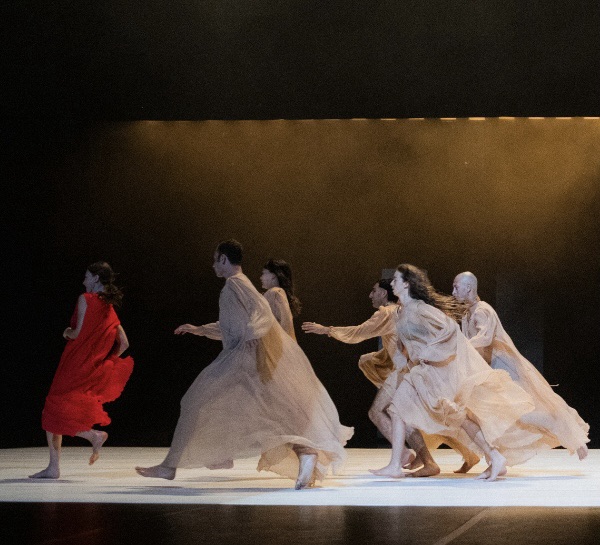
Q: What has it been like to work with the dancers who bring the piece to life?
A: It’s been a very exciting process, partly because this is a new group of dancers who came together specifically for this chapter in the company’s life. We spent a lot of time finding out who these people are, how they think and move, how they relate to one another, and what kind of choreographic environment we could establish together. I don’t come into the studio with a predetermined set of movements that the dancers have to learn. I’m much more interested in creating the conditions in which they can make decisions, explore possibilities and contribute to the development of the work. Their individual intelligence and experience are essential resources.
Choreography doesn’t happen inside my head and then get transferred onto the dancers. It happens between people. My role is to establish the structures, the rules and the direction, and then to observe what happens, understand what the work is asking for, and intervene when necessary. The dancers are not there to execute my ideas; they’re active participants in a process that requires their attention, imagination and judgement. What I find most rewarding is when the structure becomes sufficiently alive that it begins to generate things I couldn’t have anticipated on my own
Q: How do you create a piece like this? What does your process look like?
A: I don’t really have a recipe, and I don’t begin with an idea that I want to express. I begin by studying the material in front of me. In this case, that means the music, the dancers, the space and the relationships that begin to develop between them. I spend a lot of time looking, trying things, observing what works and understanding why. I create pieces in order to understand things and to learn. The process is a continuous exchange between making decisions and discovering that the decisions lead somewhere I hadn’t expected. You establish a direction, but you have to remain open to what emerges along the way.
With Five Days in the Sun, the music provides a very rich and complex structure, but the choreography has to develop its own internal logic. The movement, the relationships between the dancers and the lighting all contribute to a larger system that unfolds through time. I’m not trying to produce a fixed sequence of images; I’m interested in building something that can function as a living organism, with its own capacity to change and develop. My work as a choreographer is partly about determining the conditions, and partly about knowing when to intervene and when to leave things alone. In the end, the work has to become more than the sum of the decisions I made to bring it into existence.
Running at Sadler’s Wells from 3-4 November. Book here!