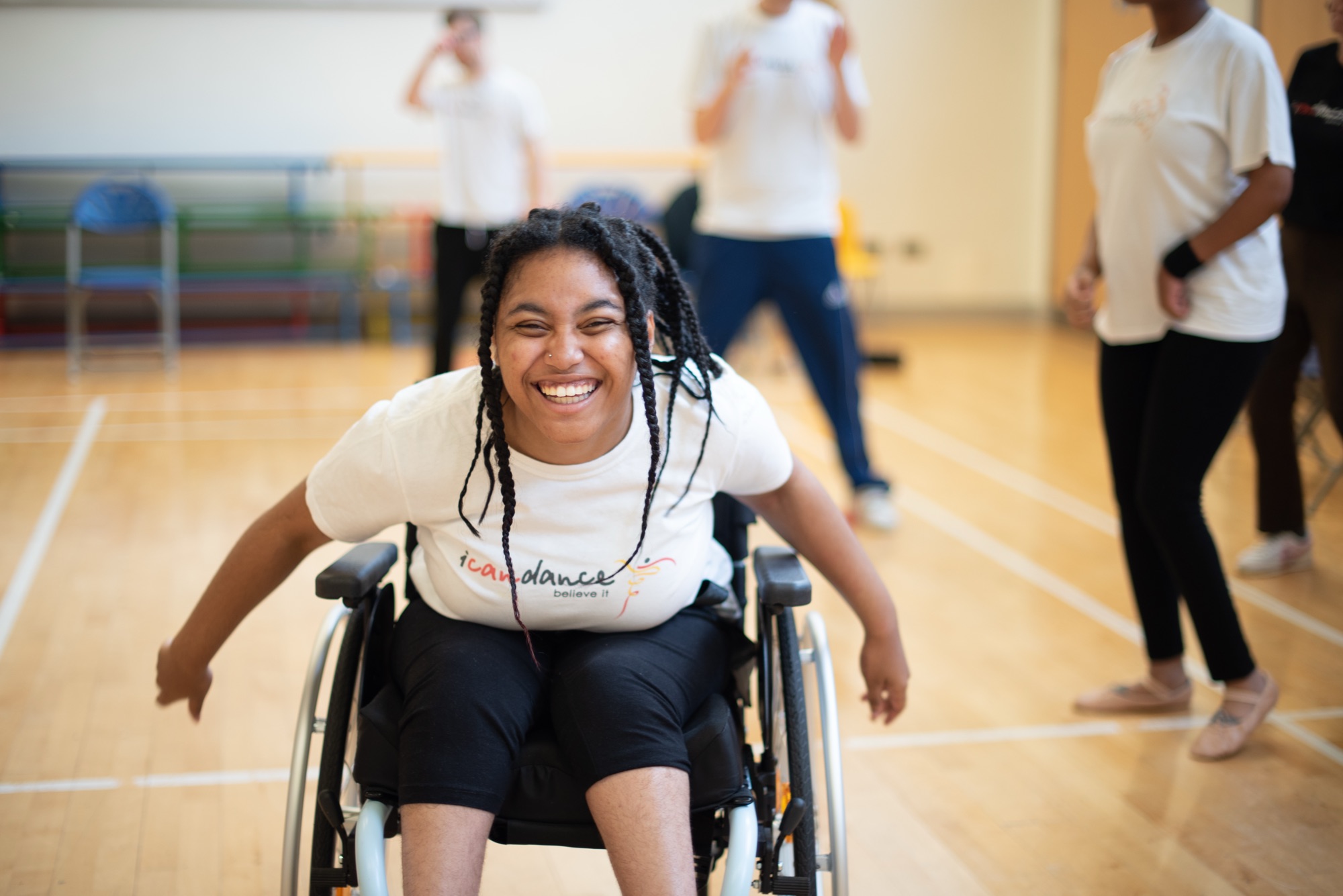
Established in 2006 and celebrating its 20th anniversary this year, icandance is a UK charity that works across Greater London to bring dance classes to young people who otherwise might not experience dance in mainstream settings.
We sat down with the founder and CEO Juliet Diener to discuss access, the importance of charity funding and how disability helps create a better world.
Q: Tell us about icandance?
A: We are built on the belief that through movement and dance and performance, we can connect with each other and build relationships in different ways. We were established to empower disabled young people and help them to find their voice.
All the facilitators at icandance are dance movement psychotherapists, so we use dance as a means of connection, and building relationships and community.
Our young people use creative therapeutic tools to help them to express themselves and tell their story through movement. Dance really is the medium in which young people share their lived experience through different creative processes in the studio.
Q: What was it like when you started the company?
A: At the time, there were a few of the bigger, more established companies doing important work, but there wasn’t a lot of community-based grassroots organisations. There really wasn’t a model like icandance, which follows the model of your everyday dance studio teaching dance classes to local communities. So, when I started, it was very unique and different. To a degree, it still is, because our model is quite different, because we work from a psychotherapeutic frame to enhance creativity.
What is exciting is that it is so much more the norm, and I see dance organizations and governing bodies really thinking about how we make sure that every dancer can access the opportunities that are offered. I feel that we’ve been part of building that.
Whilst we offer our weekly regular sessions of bringing disabled young people into the dance space, we also always look to collaborate and try different things such as performance opportunities, and we love working with other organisations.
Q: What type of communities and families do you work with?
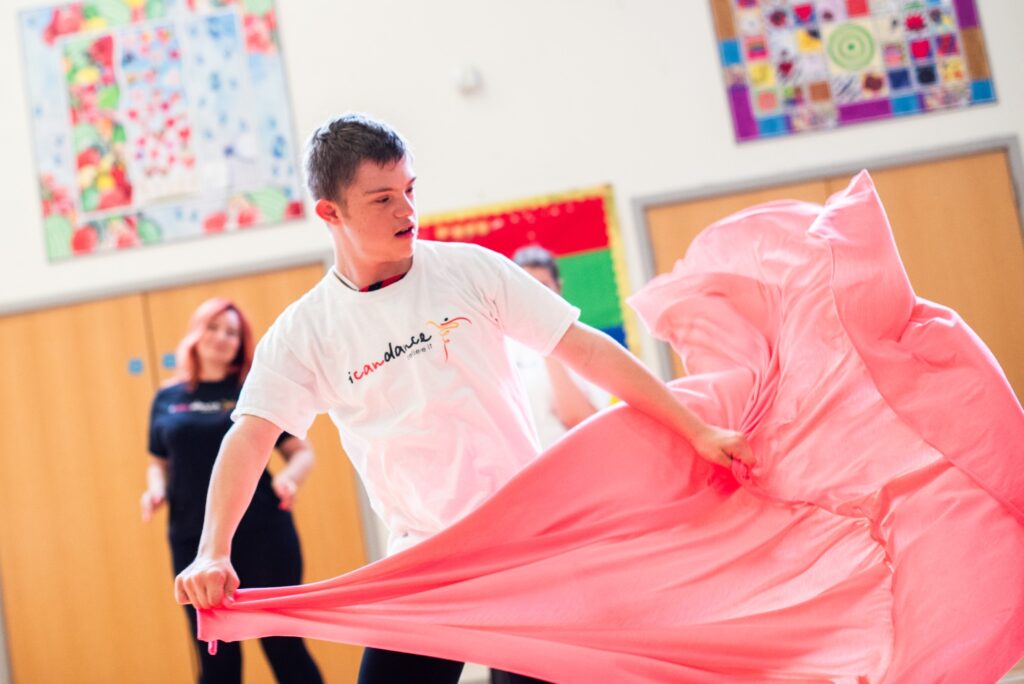
A: All the young people who attend are disabled, so from ages four to 20 plus. We work with everyone yet specialise in some of the most complex of disabilities in young people, and for that reason use very specialised approaches.
We find a very personalised way of working with any family who come to us and many of the young people stay for many years. Our level and depth of support is quite unique in that we focus on the development and evolution of a young person. It’s about using dance as a medium for them to understand themselves.
We have a community leaders’ programme where we’re developing young adults to be able to go and co-facilitate in schools. We have a youth dance company that performs across London constantly. We’re always performing; this year we have been at the Camden Youth Festival where we did acollaboration with Acland Burghley School. We also ran a boy’s project that was funded by Camden Cultural Fund. It was a fully inclusive group where disabled boys and some non-disabled boys collaborated.
Q: What was it like for them to work together?
A: I think it requires education, skill and real holding to make sure that the opportunity is managed.
We developed a fantastic resource that we have on our website for working and encouraging boys in dance and providing inclusive spaces. It was one of the most rewarding projects we’ve run.
Q: What do you think young people can learn from one other?
A: What we’ve noticed is how better the young people respond to each other than to adults! For me is that peer collaboration. These boys worked side by side with varying differences, yet used that common language of dance.
Saying that, I don’t think you should just put these groups together and think it’s all going to work. I think it requires careful thinking and planning and thoughtful consideration about the triggers that can happen in spaces like that.
Q: What does good access look like to you?
A: Our model at icandance really is about therapeutic approaches, and very much sitting in circles, reflecting, moving, doing things gently. We are very process focused, and not just outcomes focused. We also let young people know that it’s their space to make choices.
When you bring different people together, it takes time and care. It needs to be handled gently. In my previous example above, it wasn’t just a case of putting the boys all together tomake it work. It was more about educating both groups tounderstand what it meant to meet each other.
On this project with the boy dancers, we found a commonnarrative that they all travel on London public transport. They developed this story of how we are all separate in our own world, but then how we all come together.
The whole dance then unfolded with them on public transport,how they bash into each other, but then the bashing becomes like this creative exploration.
It was a very thoughtful, collaborative process that alsoprovided a reflective space where there’s no right or wrong. We found common connectors and made sure everyone’s voice was heard.
Q: How does disability help us create a better world?
A: The world that we try to create at icandance is that everybody is valued and everybody’s equal, and no one’s role is more important than another. At present, society treats someone differently because they experience the world in a way not seen as normal. Immediately their contribution is seen as less valuable. At icandance we think that you just need to find the way to make their contribution seen.
Just because someone’s non-verbal doesn’t mean they are not experiencing the world just like us. Our way of working through movement means that they can find a way of expressing themselves in a different way.
I think for me the world would be better if we just valued each other’s contribution but also took the time to find out what that is. Take the time to listen from a ‘body place’ and not just about what is said and what is written or heard.
Q: Do you think the dance industry gets it right?
A: I feel that the dance world needs to make sure that everything is equally offered, so that people can choose the pathways that are not only right for them but create places where they can merge and come together.
Q: How are you finding the challenging funding climate?
A: I think that it will always be a challenge, and that is the hard part, because nobody really wants to fund the administration it takes to run a successful organisation.
We’re constantly, as charities, forced to prove that we’re either not making enough or we’re sort of just surviving. The minute we look like we’re thriving too much, a grant funder might say: “Oh, you’re fine, I don’t need to fund you!” All we want to do is to be able to make plans, yet there’s this constant feeling of charities holding a with a begging bowl, even though we make the biggest difference to grassroots communities. The impact is huge, but somehow that the highsaturation of people all trying to get money from the same pots creates I think an unhealthy sense of competition within the charity sector.
Until there is a better model, we will always be in the begging seat.
Read icandance’s impact report here: https://icandance.org.uk/our-new-pr-deck/