Words by Georgia Howlett.
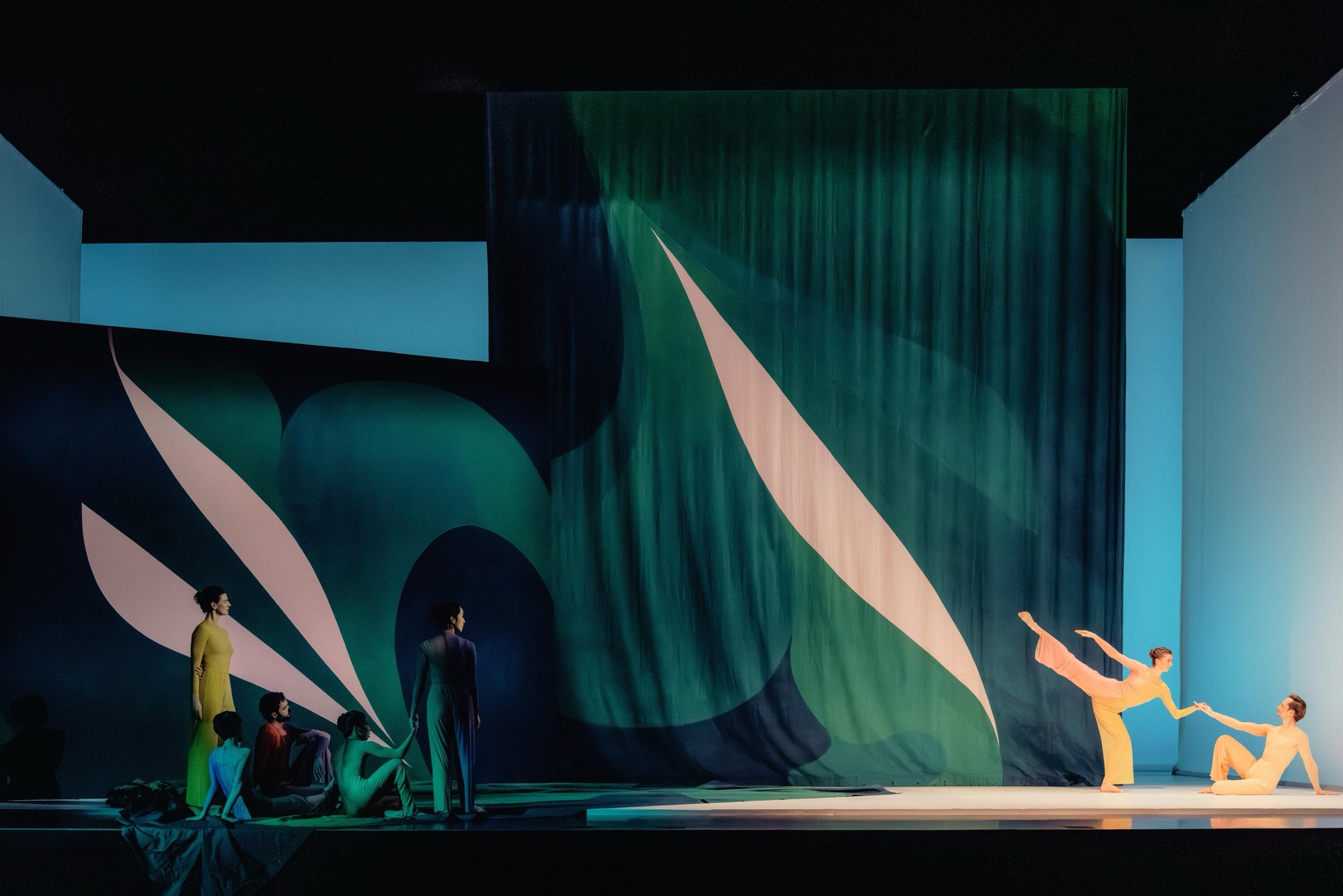
Set to Beethoven’s Symphony of the same name, Pastoral unites the work of three renowned artists; choreographer Pam Tanowitz, composer Caroline Shaw and painter Sarah Crowner.
The piece makes its UK premiere in early October, but before that, we sat down with Tanowitz to hear her thoughts on playing with scores, pushing herself and why dance is never abstract.
Georgia: Can you start by telling us, in your words, about Pastoral?
Pam: It is a collaboration with Sarah Crowner, visual artist, and Caroline Shaw, composer. It’s really a piece we all created together – separately, and then we came together – using the idea of pastoral, what it means and how we define it in our different art forms, as well as what it could mean now, in 2025/6.
For me, it’s very much a group piece. Every dance I make is a reaction to the one I made before. The piece I made before, Song on Songs, was very much duets and solos weaved together, and that grew out of making it in a pandemic so I had to keep everyone separate. So feeling the group will was really important to me, and also to challenge myself with moving big groups around. Of course there is always pull out solos and duets, but it starts with a group. And then always working on deconstructing and re-examining traditional modern movement, as well as ballet movements, and mixing them together, having them talk to each other in new ways, juxtaposing, bump to bump, against each other.
Georgia: Why did you choose to use Beethoven’s score, Pastoral?
Pam: I was going to do Vivaldi, Four Seasons, and then I changed my mind. I knew that we were going to use it as a framework and that there would be space in it, so I created a lot of the movement to the actual score and then I took the score away. And we rehearsed a lot in silence as well. But the main inspiration came from that score and I was curious to see what it would be like to create something to music, and then take that music away, and layer something else on top of it, or against it, or next to it.
Georgia: So, your rehearsals were quite experimental…
Pam: Always.
Georgia: Were you, Shaw and Crowner all making at the same time?
Pam: We talked about the idea of pastoral, and we kind of all went our own ways with the definition, and then at the same time, we came together. There was a week where Caroline was sitting next to me, she’d come into rehearsal with a bunch of musical ideas and I was showing her some dance and she was creating in real time. It was really a combination of working on our own, and together. All three of us are very similar in the way we work, I don’t want to exactly speak for them but in conversations we’ve had, we always borrow from ourselves as we move forward. So there’s snippets of some of her old compositions in this, like the way I take movement, sometimes from my old dances, that I feel like I want to work on more that I feel like maybe weren’t successful in one piece that I can bring forward into another. So I sample from myself, steal from myself, and Sarah does the same thing with her artwork, so there’s a similar way of working that also connects us.
Georgia: I can imagine with this way of working that it might be hard to know when the piece is finished?
Pam: I am never happy with it, and I’m done when it’s time to put it out. I mean, I tweak stuff. We premiered it in 2025 during the summer and when we re-did it in January 2026 I changed stuff, and I changed stuff for this tour as well. I hope it keeps getting better.
Georgia: You are selective about the dancers that you work with as your movement is highly challenging to perform. Can you speak a bit more about how you work with dancers when making a piece?
Pam: It’s very collaborative. I’ll teach some movement, we’ll work on it and then together we’ll manipulate it in different ways. I don’t use counts. If a dancer is so worried that they have to be in a certain spot in the music or in space at a certain count, they’re only thinking about that and that’s not interesting. I’d rather we experiment with different ways of performing the movement and then figure out where things need to land. My dancers need great technique, but I also need to like them. They need to have a good sense of humour, and be problem solvers, that’s really important. I ask a lot of my dancers. They have to be very present in the space.
Georgia: Beethoven’s score is about the natural world. How present in your mind was this theme when creating movement?
Pam: It was always there. It was a starting point, we used it as a framework and then redefined what that meant, to all of us together and all of us on our own. I was very inspired by the idea of ballet, landscapes, backdrops. There’s also a section of the score that is NYC traffic, because if you live in NYC and that’s your background, that could be soothing to you, that could be an escape. For all of us nature did play a part of it, but it wasn’t as literal as that all the time.
Georgia: All of your works are quite abstracted. What do you think abstracted dance offers audiences?
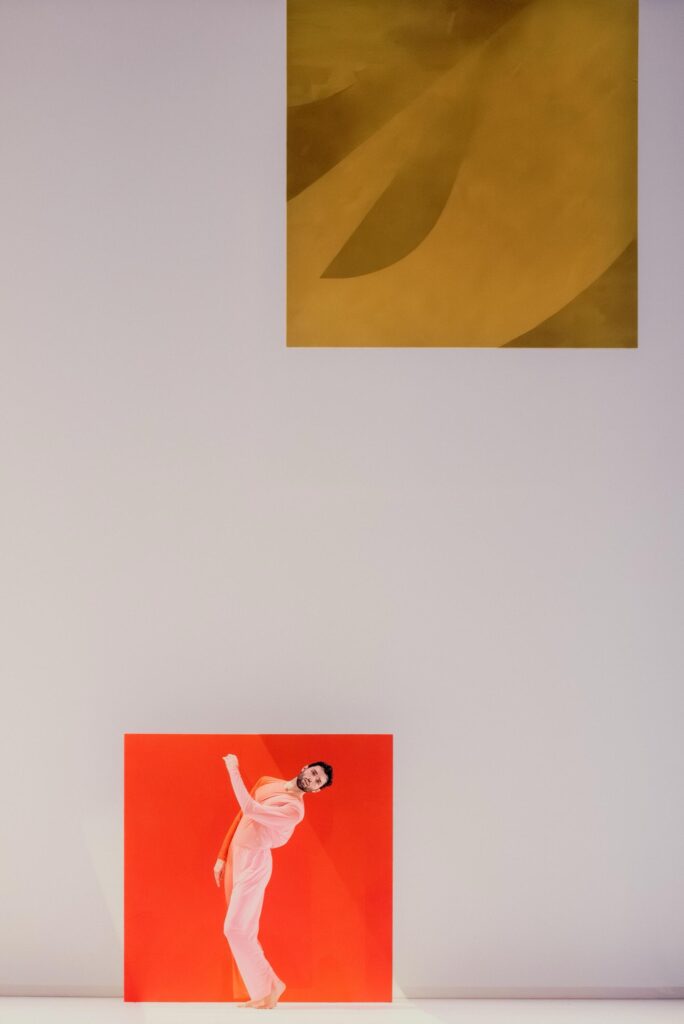
Pam: First of all, the word abstract – I use it too – is problematic because a person’s body onstage is not abstract. If you put a man and a woman next to each other (Balanchine has said this and Cunningham has said this) there’s already a story. My work is very exposing in that way, where it’s very technical but the dancers can’t hide behind a character. I am asking them to be themselves, so already there is a story. There’s always the human element.
The other point is the language of choreography. You make a dance, you choreograph a dance, and it can only exist in this format. You can’t write a story about what is going on. The writing of a choreography is very special and it’s the only way to express this type of thing, where people can look at something, absorb all the juxtapositions, and relationships and space and composition and structure that’s going on in real time, and then it’s gone. I could say, why do people need to look at abstract art? It’s not telling a story. But there’s a lot of reasons why.
I think because it’s dance, people have a harder time sometimes, trying to understand, but it actually should be easier.
Georgia: There’s a definite instinct in all of us to try and put a meaning on something.
Pam: That’s true. And there are little stories inside the dance, but when I make work, I start with movement, and I try to figure out, as I work, what the meaning inside the movement is, instead of placing a set idea on top of it. Making a dance is really hard. You are negotiating a lot of different things, in time and space, there are all these dialogues going on at once. It’s very complex, and I think that’s also a reason to make dance.
Georgia: What words best capture the feeling of performing Pastoral?
Pam: (From the dancers) Vast expanse, part of the whole. To me, Pastoral plays with the representation of nature in art.
Pastoral comes to Barbican 1-3 October. Book here.