Words by Eoin Fenton.
The heat of the summer is over, and like hibernating creatures the theatre-going punters of London prepare to get back into venues across the city as “the season” starts again.
An undeniable herald of the year to come is the annual, autumnal fixture Dance Umbrella. A cross-national, multiaesthetic, artist-focused festival that takes over London’s dance scene in person and online.
From the 7th of October up to the 27th, Freddie Opoku-Addaie will be at the helm for another edition — his 6th as Artistic Director though he is now also Co-CEO.
It’s a busy time for him, and he’s had a day full of meetings, but before we start he insists on hearing a little more about me and we chat about auditions and gossip in the wider dance world. The weight of the impending rush of the festival might be on his shoulders, but he has a light and chatty air to him, often smiling and laughing.
I spoke to Freddie about his own history with the festival and what to expect this year.
Eoin: How did you get into this sort of role?
Freddie: It’s in parts so passion, craft and needs must (laughs). I studied, performed with other choreographers, toured with different artists before making my own work. Through that I wanted to explore the multitude of places where my work could sit. I started to put my work together with the work of my colleagues. The previous Artistic Director Emma Gladstone saw something I had facilitated and curated and then invited me to come and work as a guest curator. When that three-year period finished, I began doing other curatorial work. I also did some lecturing to earn a living — I was even trying to be a yoga teacher. Then this job came up so I applied, now I’m here!
Eoin: I’d say it’s comforting to know for many people that even the directors of big dance festivals have had to go through the portfolio artist career. Did you ever get your yoga teaching licence?
Freddie: Oh I’ve definitely done my 200 hours! I know it’s meant to be something like 10,000 but I’ve done the 200.
Eoin: Have you found inner peace yet?
Freddie: (Laughs) you know what? I have to confess, when you’re starting a family you need to think about getting that extra income, when you need that creative entrepreneurialism.
I actually started with hot yoga, even though the history behind that one is not great (laughs). I trained to be a yoga teacher but I think in reality it was to get deeper into my practice. I think teaching also makes you more aware of your practice. If you teach someone wrong and they get injured… you don’t want to get sued by anyone!
I’ve still not found my peace yet, as they say it’s a continuous practice.
Eoin: Moving from that reality into this position, do you feel settled yet?
Freddie: No, because every year it’s changing. The landscape of arts and geopolitical structures are volatile so you need to be nimble. I wouldn’t say I’m settled but I’m more aware.
I do think that freelancers are the most strategic people in the sector. When you’re free, you’re never just freelancing about, you’re looking for your next bit of work. You are continuously being strategic about what’s next. I don’t think that type of practice ever leaves you and it’s quite important in these types of roles. Most of the programming is working with freelance, independent artists who are not regularly funded. It sometimes can feel a little sad to understand that feeling, but it’s important too because you know where they’re coming from, having empathy. I know what that’s like!
Eoin: Tell us a little about your prior history with the festival.
Freddie: I was lucky enough to actually perform as an artist in the festival, as well as presenting my own work. I’ve come and seen works in the festival since 1996. I’ve been a participant, a spectator — when I worked at The Place I actually worked in the bar to be able to see work for free. Those different steps have really shown me what this festival means.
Eoin: Something I appreciate with this festival is its insistence on showing various styles and perspectives in the programme. What are you looking to show?
Freddie: It’s finding an undeniable, curious voice. I’ve navigated through different movement practices so I understand when someone is trying to sell me a false narrative about where something is coming from.
I like it when someone is forthright about not having invented something; when they just show their own practice, their lived experience and expertise. When I say lived expertise it’s like how I have navigated through many different movement styles with my own lived expertise as a Black male. Some forms are maybe more innate because I grew up around it or my parents were doing it, but we all still need to experience what else is out there.
Eoin: Tell us about your attitudes to the programming.
Freddie: I like finding a venue that echoes or plays with what the work explores. A good example of that is Charlotte (Mclean), Jack (Anderson), and Malin (Lewis) with not for glory. They’re speaking to Highland Dance, Irish dancing, and Bagpiping. I’m hoping that when people come to see it that it might flip their expectations a little.
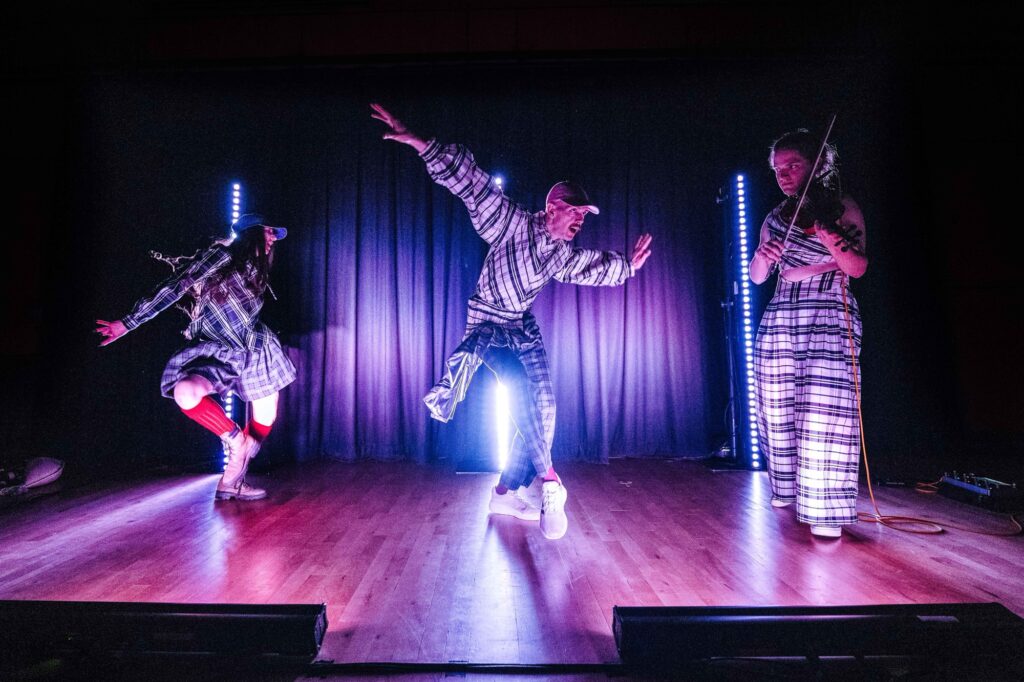
A Place to Dance at The Place, no pun intended, is a different way to see and experience dance. Those things really excite me as a director and it is what Dance Umbrella really is about: widening how dance is seen across our global city. I like it when venues also play along with this, seeing how this can play out with their customers and add another lens.
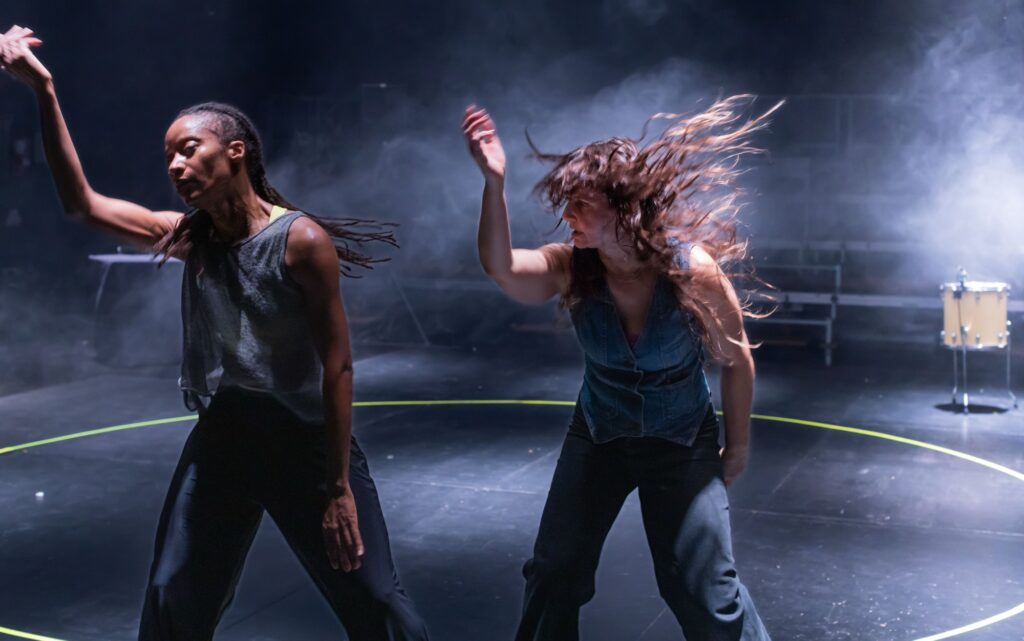
London isn’t easy, in a good and bad way. We’re spoiled in that there’s a lot to see and do, so to cut through that and bring something challenging can be tough, especially with trying to get venues and funders on board. I also want to see why an artist believes that their work will fit into the ecology of London, one of the most diverse and reflective cities of the world.
Eoin: What else should we look out for in this year’s edition?
Freddie: Everything! The programme features all my favourites – it’s like choosing between my kids! I think there is so much to experience; from the performances, to digital, the discussions with artists like Akram Khan. They’re all interconnected but that’s really the fun part, trying to piece those things together.
(Freddie begins to comb through each work with a little tidbit, recounting every name and piece of information like listing off relatives visiting for a wedding)
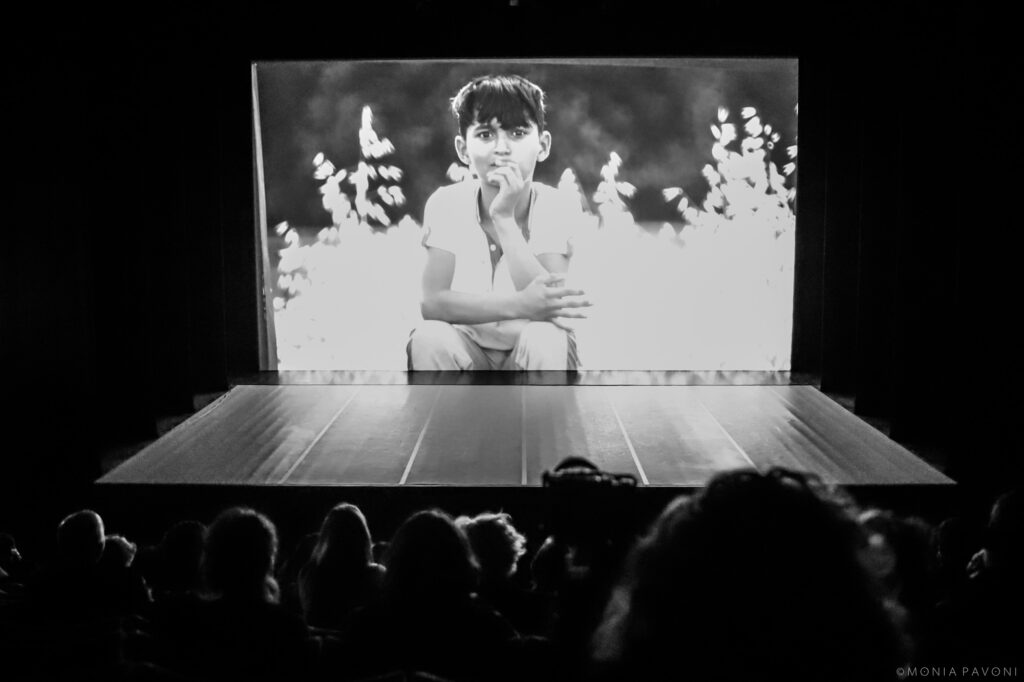
The Digital Programme is great too. Dance Umbrella has been doing the digital programme since back in the nineties. It’s not just something we’ve kept because we started it during the pandemic. It allows artists to be inspired even if they’re outside of London. Maybe they’ll want to make a dance film and be part of the canon.
I think going to Dance Umbrella is a little like seeing the next big thing. It’s also a place for artists to commune together and navigate the challenges of the world. It’s important to find space for that part of our humanity. It takes the spectator alongside the artist to make the magic!
Eoin: When you’re watching dance, what sorts of things tick your boxes?
Freddie: Something that has appeared more recently is the undeniable aspect of it coming to London. Some works I sit there and think, how will this sit in London? Let’s see. Figuring out where it could be presented is exciting to me too.
I love to find more venues for dance artists to present their work. I had a wonderful conversation with Lea Anderson from the Cholmondeleys and Featherstonehaughs about how she would do a tiny choreographic score in front of her band while playing gigs. That was how she got to practice.
I think some work you just know, it’s instinctive. Other times you go back and forth figuring out what might work with a specific venue. The sum of our parts is what allows us to showcase these independent artists, joining forces to allow that to happen.
It’s seeing a work and just feeling like it’s undeniable. Sometimes you’ll see something that looks too familiar. Back in my day you’d see a lot of work that was Wayne-esque, Akram-esque, DV8-esque. Sometimes you’ll see something that has a new angle though too, a new way to expand on previous practices.
Eoin: Do you often grapple with the balance of catering to the dance-going audience and a more general public?
Freddie: In my head grappling with that is a real thing. But also it’s London, there’s such a wide range of things to see. I mean I’ve heard how Trisha Brown’s work wasn’t very well received back in the day but we can’t get enough of it now! Some things become appreciated with time.
I think a really interesting choreographic work doesn’t even need to be just about the steps, but the sound and scenography. Those things can really come together and stay with you afterwards. It’s something that as an artist as well can be considered and reconsidered when you decide what you’ll take with you and what you’ll never do again. It’s an ephemeral practice.
Eoin: Maybe like yoga too – a continuous practice!
Freddie: I mean yeah! Sometimes you have a great class, sometimes it’s horrible. Maybe that’s why you have so many dance artists doing yoga…
Eoin: The festival is nearly getting to its fiftieth year but still feels pretty fresh. What are you hoping is to come in the future?
Freddie: We’re always working on, what I would call, widening the centre — if there even is a centre. There are some artists who have just been working away on their own thing, so they wouldn’t be emerging artists but they present an emerging practice. It’s about showing something that hasn’t maybe been visible in these dance spaces, and hopefully Dance Umbrella can be the place to do that. I think that’s what the festival should continuously do.
I do want to bring works to even more venues but it can be a challenge in October in London with the weather (chuckles). Finding new and younger audiences which is something built on from the previous artistic director. And continuing curatorial practice — this is something I’m really hoping we can keep building on going forward. Diversifying the field of who gets to decide what we see on stage, especially in a global and international city like London. During the festival, we have a talk on Curating in Context, looking at programming across different geographies.
I know when we talk about the future everybody brings up AI and the impact of it, but I do believe that dancers already have this innate intelligence, a sort of AI, in the body. I don’t think AI will overtake physical intelligence, but the relationship is something that is pretty interesting. But I think as well when you go into the theatre and have that kind of heightened experience you can’t really ‘AI that’.
Dance Umbrella runs from 7th-27th October across various venues in London. More information about this year’s edition and the Digital Programme can be found here: https://danceumbrella.co.uk/festival/
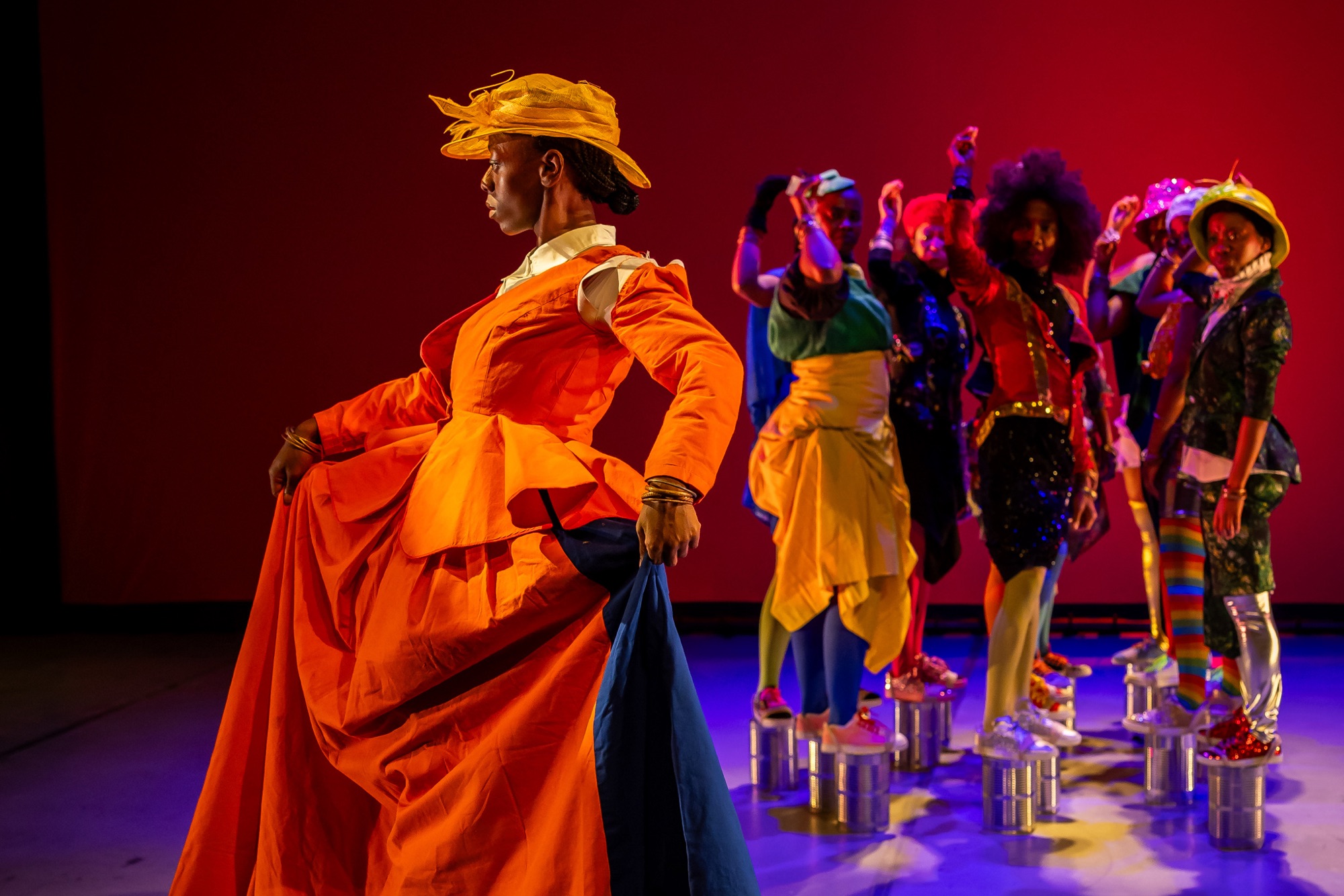
Header image of Mamela Nyamza’s THE HERDLESS by Kim Stevens.