Words by Eoin Fenton.
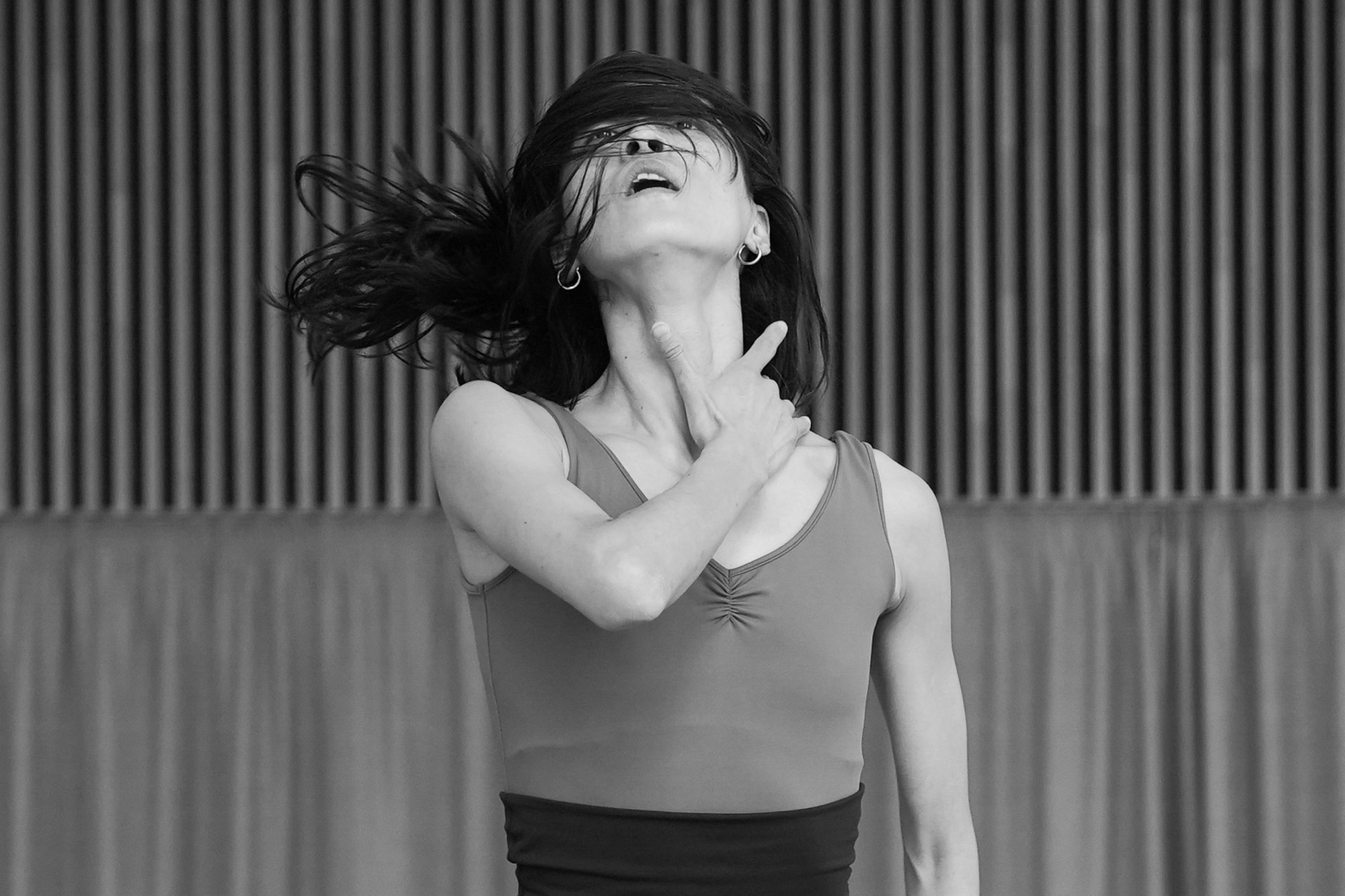
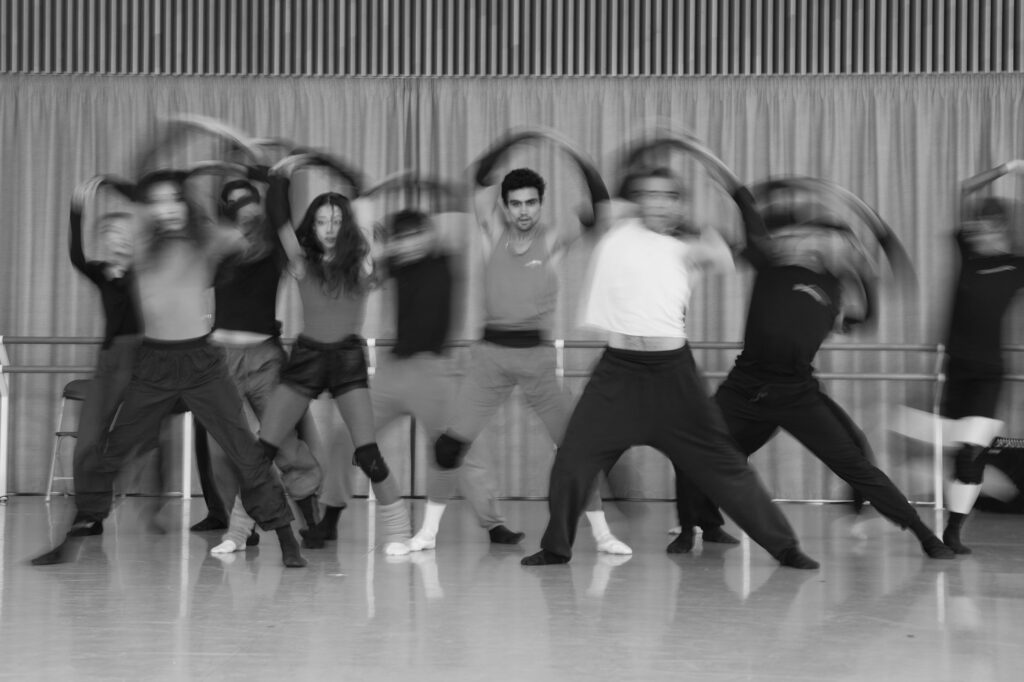
Thrashing bodies, whipping hair, thunderous stamps from the ensemble to the beat of drums. This is not your typical rehearsal of a new work of contemporary dance, this is English National Ballet (ENB). Tutus put to the side, knee pads on, loose clothes slouching onto tired bodies.
ENB are opening their season with a statement, three works never before seen on the company, two of which are world premieres, all different in style and approach. In addition to Balanchine’s Symphony in Three Movements and a premiere from Michaela Cole, choreographer Jae Man Joo makes a new work for the company — Auguries of Innocence — inspired by the poetry of William Blake.
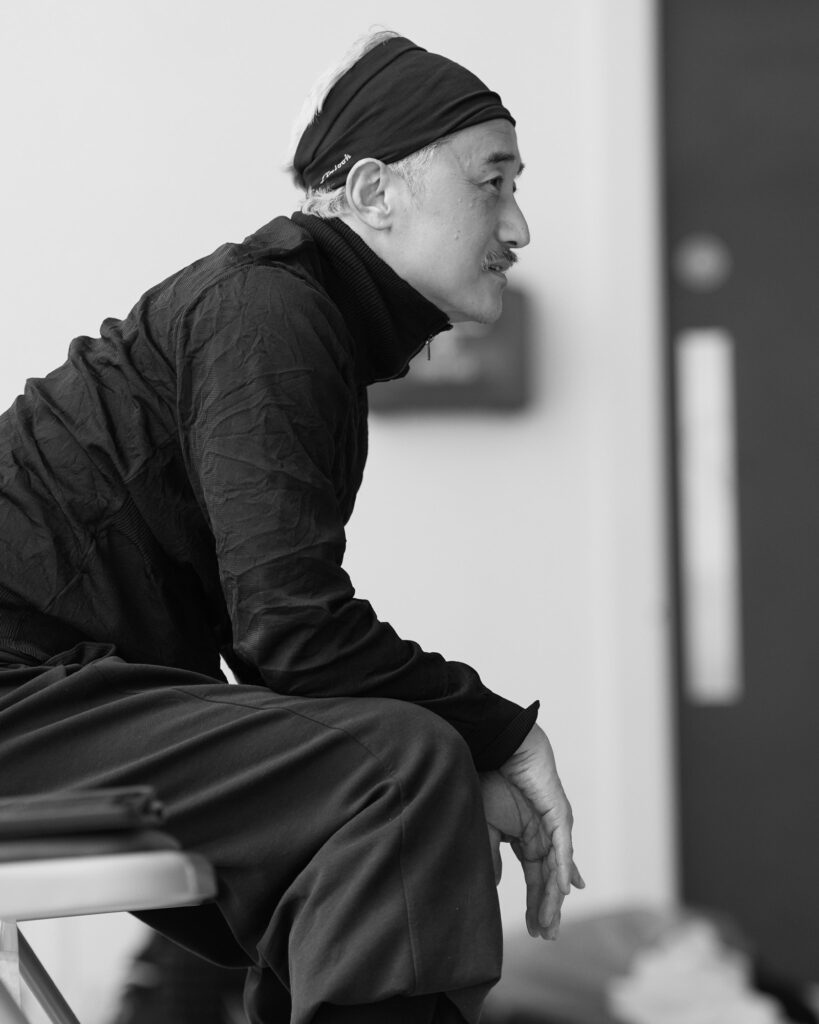
Joo, as an artist, stands between two worlds. Contemporary and classical, east and west. His work is becoming increasingly in demand and has already been drawn awards in his native Korea as well as beckoning calls from ballet stars and directors in the US and Europe.
Q: Tell us a little bit about what drew you to Blake’s poem.
A: When the opportunity with English National Ballet came to me, I felt both excited and curious about what might inspire this new creation. I began exploring British culture through many different lenses, painting, sculpture, music, and literature. During that journey, I encountered William Blake’s Auguries of Innocence, and something in it immediately resonated with me.
Blake looks at the smallest parts of existence and connects them to something much larger. Humanity, animals, nature, innocence, suffering, justice. They are not separate worlds; everything affects everything else. I found that idea incredibly powerful.
The choreography grew from that sense of interconnectedness. I wanted to explore what happens when we lose compassion and connection, but also the hope that we can find them again. Beneath all the complexity and corruption of society, I believe there remains a very human yearning for unity, goodness, and a better way of living together.
Q: How did you begin to develop this choreography for “Auguries of Innocence”?
A: Finding the right music was very important because I wanted it to have the same emotional connection I felt in Blake’s poetry. I found that in the orchestral music of P?teris Vasks. His music affects me very deeply, there is beauty in it, but also sadness and a real sense of humanity. Sometimes when I listen to his music, I feel as though I’m hearing nature mourn, or hearing a sadness for humanity and compassion we are gradually losing. That felt very connected to Blake for me.
So, when I started choreographing, I wanted the movement to carry those emotions. It can be physically intricate, but I never wanted complexity for its own sake. At the heart of the movement, there always has to be something human and something we can feel.
Q: The language of the poem, as well as the movement language in the choreography is very visceral and rooted to the ground. Was this a challenge to bring to classically trained dancers?
A: My movement language reflects the different worlds that have shaped me as both a dancer and choreographer. The discipline and beautiful lines of classical ballet, the freedom of contemporary movement, and the breath, spirit, and with a lot of circular and organic qualities.
I’m especially interested in the upper body, how a small articulation of the torso, the direction of the breath, or the energy passing through the body can completely change the meaning of a movement. I love creating shapes that can appear almost sculptural, while never losing their sense of flow. The body is constantly breathing, curving, expanding, and transforming.
The English National Ballet dancers have brought so much to that language. They are not only technically accomplished, but extremely versatile and imaginative. They approach the process with curiosity and a real willingness to explore. I give them movement, but I also want them to discover themselves within it. Seeing them continually find new possibilities has been one of the most rewarding parts of the creative process. Their talent and dedication have impressed me enormously.
Q: The work is part of a bill called Rhythm Riot. Did you initially have this idea to make a work tied to rhythm, or were you approached by ENB to create something on that theme?
A: For me, rhythm is not something that exists only in music. Rhythm is everywhere in dance. You can hear it, see it, and feel it. There is rhythm in the breath, in the body, in the space between movements, and even in stillness.
The rhythm of my work is connected to an expressive and emotional journey. It can shift with the energy of the dancers and with what I want the audience to feel. I’m interested in rhythm not simply as structure, but as something that carries emotion through the work.
That’s what I find so exciting about this Triple Bill. Each choreographer brings a different voice, a different movement language, and a different sense of rhythm. The audience gets to enter several distinct worlds in one evening. It’s a very special program, and I’m delighted to be part of it.
Q: We see a figure in a dress who sort of exists aside from the ensemble. Tell us a bit about this character.
A: I created a character called the Weaver of Souls, who represents the invisible connections between all living things. I think of every soul as a thread, and each thread carries its own history, our memories, relationships, love, grief, joy, loss, and everything we experience along the way.
Those threads are constantly moving through life. They cross each other, separate, become tangled, break, and reconnect. The Weaver exists within that unseen world, gathering what has become scattered and creating new connections from what remains.
What is important to me is that the Weaver cannot erase loss. Grief is still grief, and what has gone cannot simply be restored. But perhaps those experiences can become part of something larger. They can change us, connect us, and become part of the pattern of our lives.
So, for me, the Weaver is ultimately about interconnectedness. It is the idea that even when we feel separated from another person, from nature, or from someone we have lost, there are invisible traces that remain between us.
Q: How have you been finding working for English National Ballet?
A: Although I haven’t had the opportunity to spend a great deal of time in the UK, I’ve followed the British dance scene from afar and have always been impressed by the extraordinary artists and creative work coming from here.
What excites me is the way classical ballet continues to evolve. There is a respect for its history, discipline, and tradition, but at the same time there is a real curiosity about contemporary movement and new choreographic voices. Those worlds no longer need to exist separately, they can challenge, influence, and enrich one another.
For dancers, that creates an opportunity to become more versatile and expressive artists. For audiences, it opens the door to a much broader experience of what ballet and dance can be. I find that evolution very inspiring.
Q: Finally, what do you hope is next for you as a dance-maker?
A: For me, it’s very important to maintain my integrity as an artist and stay true to my own vision rather than create work simply for popularity. I want my choreography to come from something honest and personal.
I continue to draw inspiration from my own experiences, memories, observations, and the stories that have shaped me. Dance is the way I share those things with others, through my own movement language and artistic perspective.
I believe the most meaningful work comes from a personal place. As I continue to grow and evolve as an artist, I want to remain open to new ideas while never losing that sense of honesty. That is essential to me.
English National Ballet’s Rhythm Riot triple bill runs in Sadler’s Wells from 24th Sep – 3rd Oct. More information available here: https://www.ballet.org.uk/production/rhythm-riot/