
Words by Luella Rebbeck.
From the beginning, At Your Disposal at Chisenhale Dance Space felt less like entering a theatre and more like arriving somewhere already occupied by friends and family. The performers showing new works, Anna Nicholls, Lizzy Tan, Stephanie Burrell and Kazimir Klein, knew one another. They danced in one another’s works, reappearing across the evening like a small carousel of bodies, faces and familiar gestures. It gave the night an intimacy, and it also made me think about the particular value of creating work within a community of peers.
Described as an evening of four original works, At Your Disposal was an opportunity for friends to make, show and support one another’s dance. There is something admirable in that impulse. To make work simply because you have something you want to put into the world requires confidence, generosity and a willingness to experiment. For emerging artists in particular, having the space and encouragement to try ideas in front of an audience is invaluable. At times, though, I found myself wishing for a clearer invitation into what each work was exploring, and for some of the ideas to be given more room to develop.
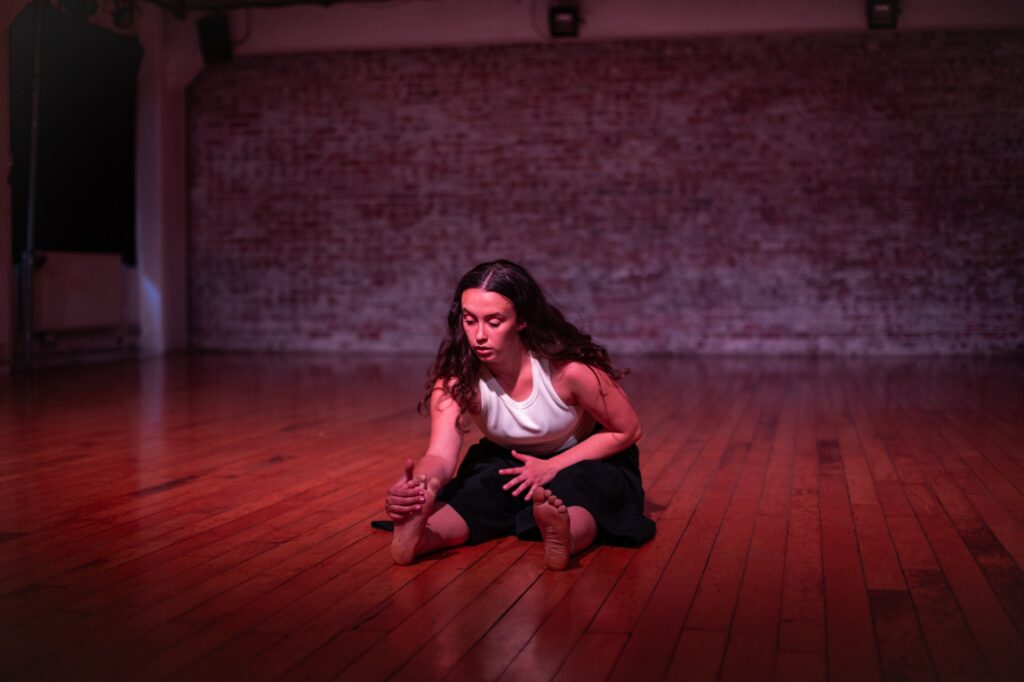
Anna Nicholls’ Pater Father opened the programme. There was something quiet and country-tinged about its atmosphere, a sense of looking for something just beyond reach. The eyes seemed important — watching, searching, perhaps waiting — and I was interested in the possibility of what that gaze might hold. I found myself wanting a stronger sense of intention or development, so that the searching could gather greater emotional weight as the work progressed. There was an atmosphere here that felt worth following.
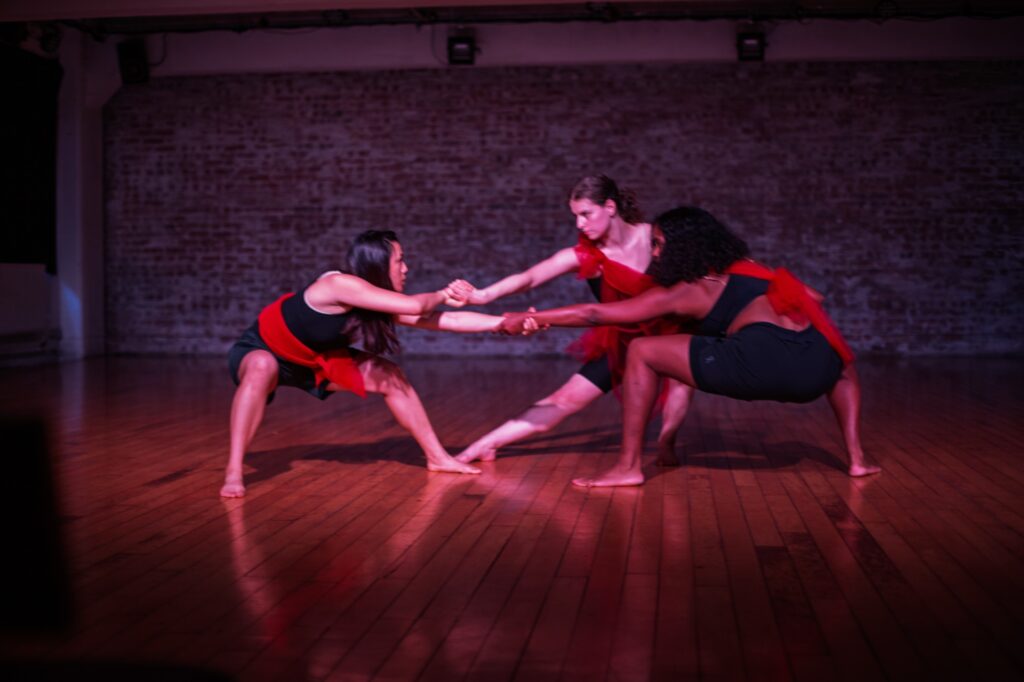
Kazimir Klein’s What’s this called again? began in darkness as a trio. Bodies appeared to react to one another through cues, musical interruptions and repeated pathways. At times it felt balletic, at times almost academic, as though choreography had been taken apart and its exercises carefully placed back onto the stage. I enjoyed the work’s interest in repetition, structure and the possibility of slipping out of reality. I found myself curious about where those ideas might go if pushed more, particularly in the relationship between the dancers and the structures they were creating. There was a playful quality to the work that I would have liked to see develop further.
Stephanie Burrell’s Gregor was perhaps the work I found most atmospherically elusive. Six chairs already occupied the space. A woman in green spoke in a practical, almost forgiving tone, without immediately giving us a reason for the speech. Bodies entered like telephones: old-fashioned, ringing through one another. A woman in blue held a pink telephone. Voices echoed. Faces became cards; bodies became struts. And then came the phrase that stayed with me: “let me love alone.”
There was something vulnerable in it, something with wings that nevertheless did not feel free. The work seemed to hover around memory, testimony and emotional residue, and there were images within it that stayed with me. I found myself wanting to understand more about how these fragments were speaking to one another. A little more clarity in that relationship might have allowed the emotional qualities of the piece to come through even more strongly.
Then came Lizzy Tan’s Rodeo! The repeated counting — 1, 2, 3, 4, 5, 6, 7, 8, rearranged and returned to — created a structure that felt both folkloric and mechanical. Two lockers watched while a dancer demonstrated, disrupted and returned to the pattern. It suggested a history of folk dance becoming repetition, inheritance, becoming something almost parroted. There was a sense of cultural sacrifice in the work, but also play.
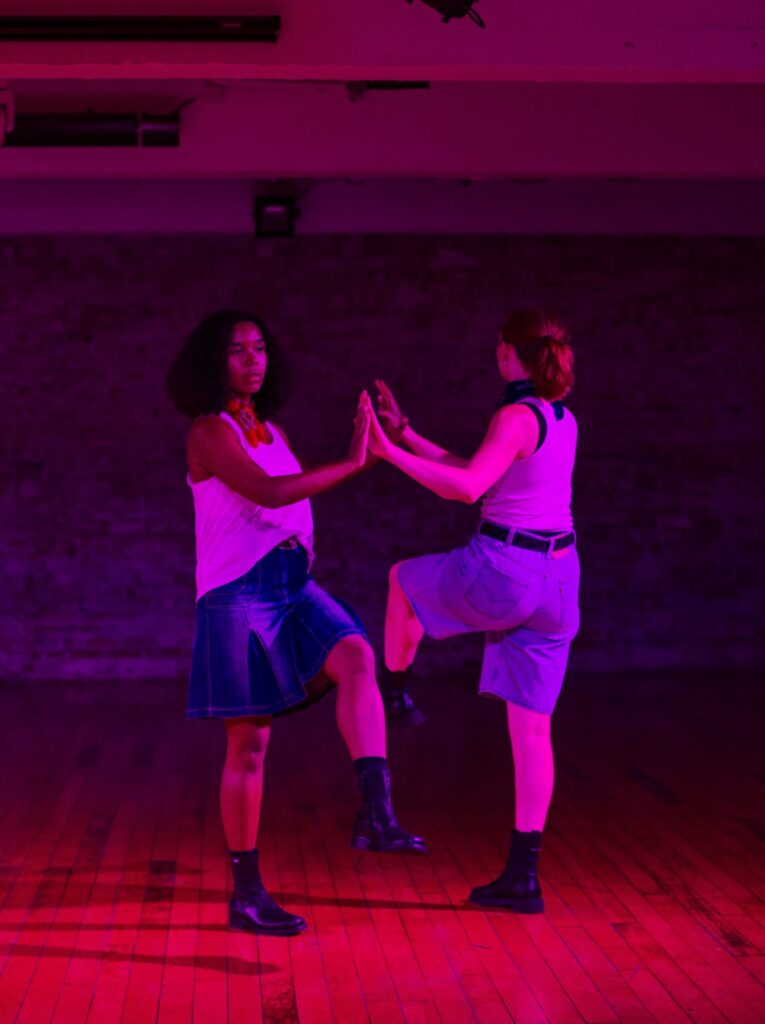
Most importantly, it felt cohesive. It was one of the pieces I found myself enjoying most that evening because it seemed to understand its own language and gave me a strong sense of how its different elements belonged together. The work’s confidence made me curious about where it could go next, and I would have happily spent more time inside this world.
Across all four works, the music was often strong, while the lighting shifted frequently and individually, giving the evening the feeling of a stage show constantly rebuilding itself. The familiarity of seeing the same performers return in different configurations became one of the programme’s strongest structural ideas. They were dancers, collaborators, friends, witnesses to one another.
That sense of community is important. There is a particular bravery in showing new work, especially work that is still finding its form. Not every idea needs to arrive fully resolved. In fact, one of the pleasures of an evening like this is being able to see artists testing possibilities and discovering what their own choreographic voices might be.
What I found myself wanting from At Your Disposal was perhaps simply a little more risk within those possibilities. I wanted the more unusual ideas to be trusted and developed further, even if that meant occasionally failing spectacularly. At times, I found the works difficult to read, and I had to stop trying to interpret them and simply let them happen. That can be a productive experience, although I also wondered whether a little more guidance or development might have allowed me to enter them more fully.
I also recognise that enjoyment is only one way of encountering work, and that this programme was not necessarily made with someone like me in mind. That is part of what makes a developing dance scene interesting: different artists will find different audiences, and part of the process is discovering who those audiences might be.
There is real value in creating a platform where friends can make work together, where dancers can give one another permission to try, and where a small audience of strangers can enter a room that might otherwise belong only to the people who made it. At Your Disposal grows out of that impulse: an evening built from friendship, confidence and the desire to put work into the world.
That is not nothing. It is, in fact, where a lot of artistic practice begins.
What I hope for in the next iteration is that these artists continue to trust that impulse while pushing themselves even further — perhaps taking bigger creative risks, and inviting audiences more deeply into the questions already beginning to emerge.
That is where I would have liked At Your Disposal to take me, and I’m interested to see where these artists take themselves next.
Header image of Gregor.