Words by Francesca Matthys.
What I love about London is that on every corner there is an opportunity to experience diverse artists sharing their work. That on every corner there are important stories being told. Chisenhale Dance Space is a vital part of this ecosystem of exciting new work.
In early May this year I had the opportunity to see Confrontations, an evening of five new solos created by a range of dance artists. When one hears the word ‘confrontations’ we may immediately be thrust into contemplation of context, resistance and the micro and macro possibilities that we may come face to face with.
As individual beings we often journey through multiple inner and outer conflicts as we journey through our diverse lives and thus solo explorations were an apt expression of this space of solitude we all may be familiar with. Each solo offered a unique perspective on this theme bringing in not only personal but also political observations.
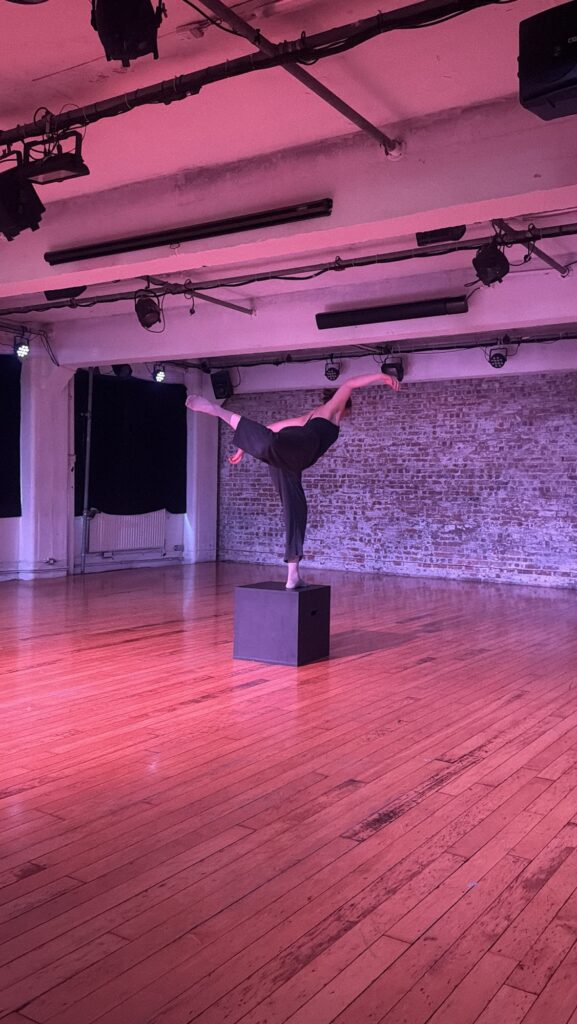
Returning choreographed by Kaitlin Halushka in collaboration with performer Sylvie Randall drew me in with Randall standing on a black box. Through a distinctly sculptural approach to choreography, their work explored the act of leaving and returning to something that held significant meaning or power. I wondered what the black box in this context meant, alluding to a symbol or authority, of subjugation or adoration and to me also a familiar prop used in traditional theatre. One that can transform and shift with ease, a quality of malleability. Randall’s movement is particularly beautiful when their back is towards us and we are captivated by their expressive, articulate movement. As Randall’s relationship to the box grows and is further embedded with weight, we become curious about what it may represent as the dancer is continuously drawn back to it. A reflection on how we too cling to things in our own lives; people, experiences and even versions of ourselves.
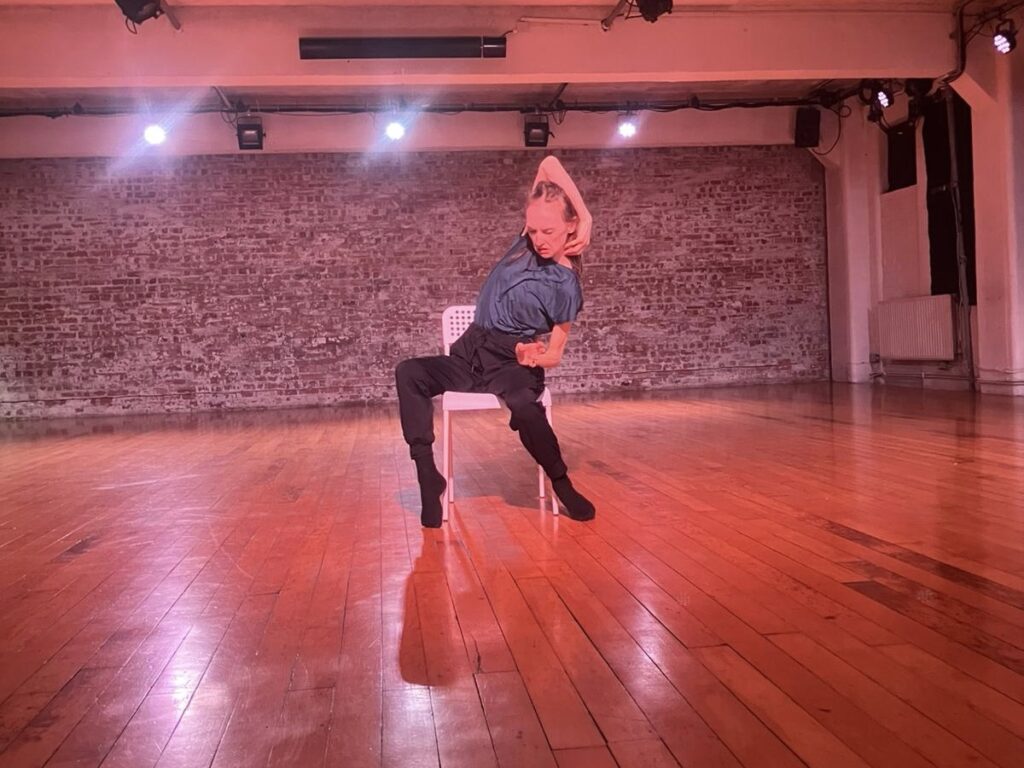
Sarah Duffin’s work [dis]tillations invites us to sit with our feelings, to be present with our current realities. Duffin employs a chair as a scenic device that supports the storytelling of this solo. Almost like an anchor that weighs them down, [dis]tillations illustrates Duffin’s poignant movement that almost compresses their body. Duffin’s hand is almost like an external entity creeping towards them, ridding oneself (through washing gestures) of anything messy, anything too complicated to address, anything that may hold shame or guilt. In this discomfort I become curious about how as individuals we begin to scrutinize ourselves or even dismiss our own complex emotions. Here confronting one’s inner demons is not only a colossal feat, but one that is taken strenuously through the body.
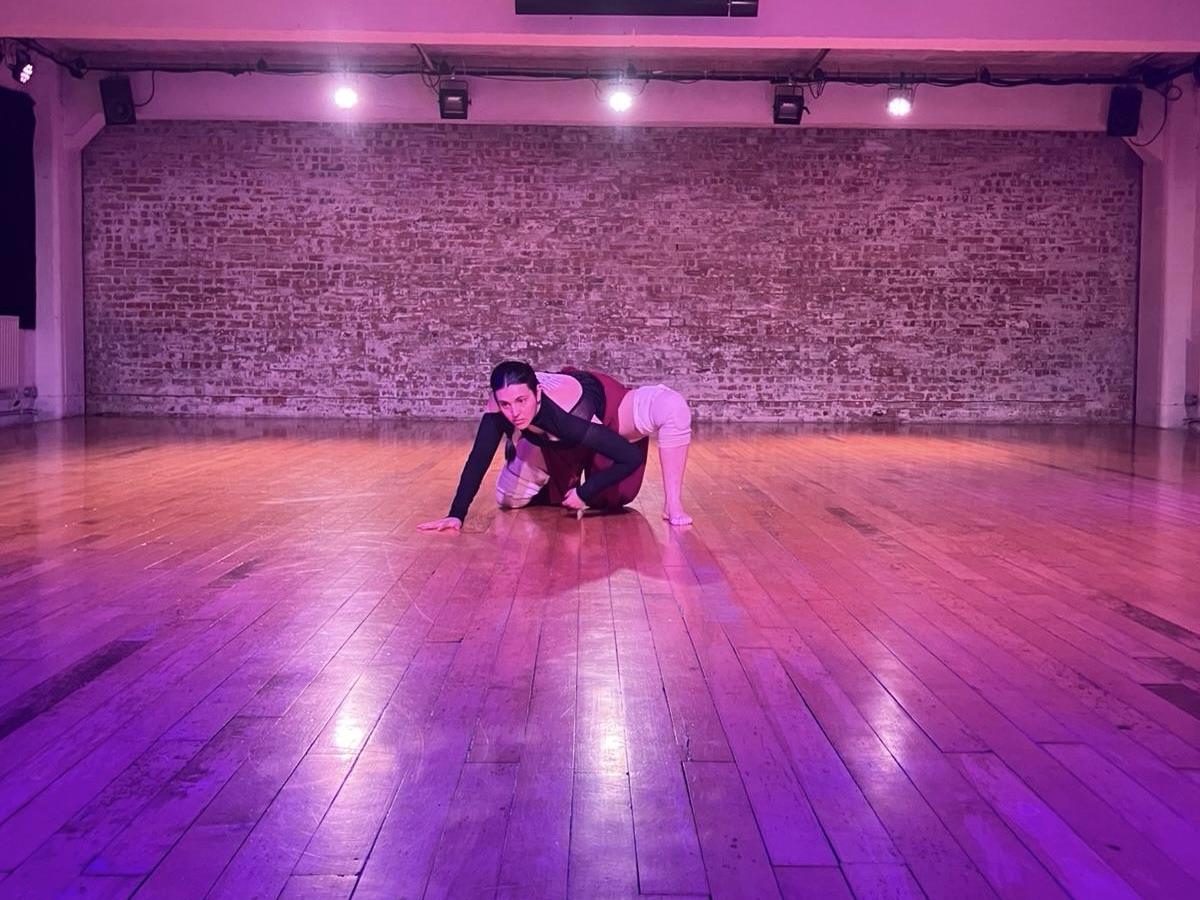
In Mirrorself we are confronted again with our relationship to our body, to our physical self that often takes the brunt through an inundation of desirable body standards projected though the media and popular culture. Our eyes are immediately drawn to the black paint on performer Mafe Fiallo. There is a clear manipulation which creates a distinction between how the hands move and interact with the rest of the body. Perhaps a representation for the inner world that plagues the performers view of themselves. This heightened storytelling through sharp pulse-like movements, and almost violent-like attacks on the body are paralleled with precise musicality and a curiosity for how the critical inner voice will continue to persist.
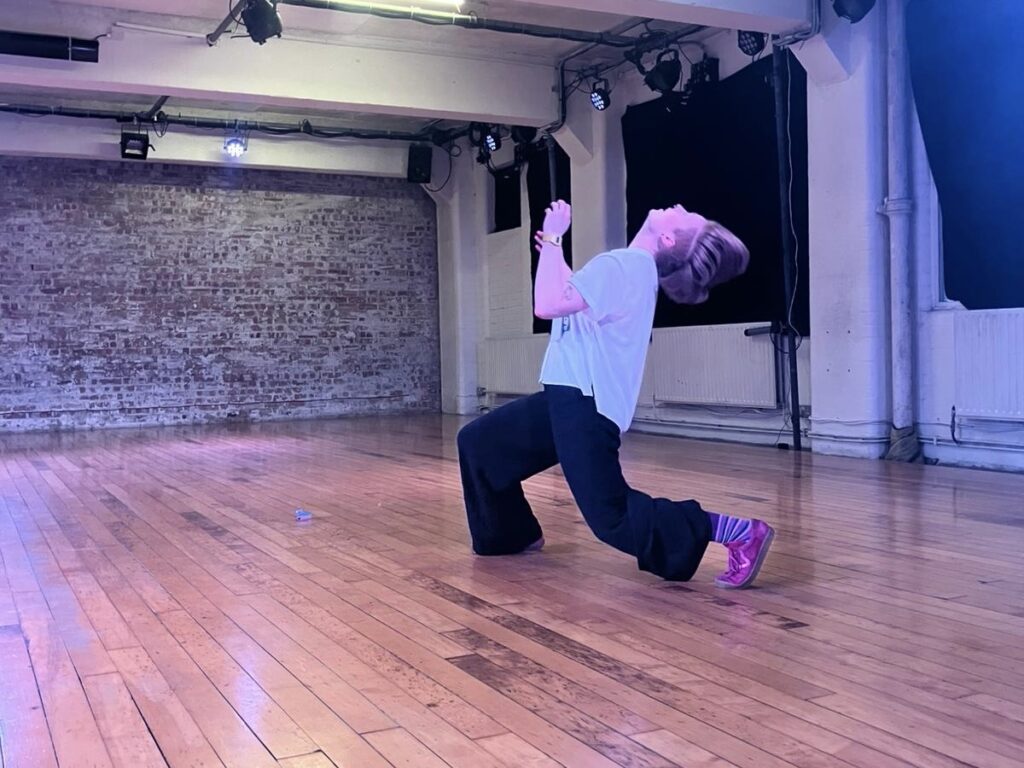
‘What if when we wake up, we are no longer here?’ is the question posed by the creative team of Monstrare. The title word originates from the Latin word; To demonstrate, show or more appropriately reveal. This fourth work in the programme feels as if it takes a political approach to the personal by questioning belonging both internally and externally. We are alarmed by the voice of Donald Trump which acts as a signifier of instability and fear regarding migrant identities. The ticking of a clock in the sound design is an immersive tool that transports us into this temporary world of liminality in which dancer Juliana Ruiz Torres traverses. There is a strong sense of instability and urgency portrayed through the movement, through Torres’s intentional presence. As I gaze upon the bandages and spine emphasised on their dancers back I think about the spine as what keeps us as humans standing and available to move freely in the world. Revealing this almost points to the vulnerability of individuals who have been displaced through genocide, or dicators that rule irresponsibly. As the work and movement vocabulary escalates to percussive feet movements and dynamic tumbles across the space paralleled with confident vocalisations, its as if the voices of those who have been silenced through the stark and violent reality of worldly borders has been elevated.
The final work of this bill of solos chair work, delves into performer Dylan Reddish’s experiences working as a therapist. In this comical and visceral work the performer through exaggerated and pained movements embodies the complexities of ‘negative transference, the phenomenon of negative and hostile emotions being projected (on)(in)to the therapist.’ It is a pleasure to watch this performance that utilises both the virtuoso and ease of contemporary dance as a tool housed in the body but also clowning techniques that allow for a dramatisation and creation of imagined characters and space. When it comes to the theme of confrontations , this is a topic that may not be considered in the forefront of our minds and thus elucidates the plight of healthcare workers on the forefront of society’s mental health issues. I wonder about how for Reddish, having an embodied practice may support or create more sensitivity around their being affected by their patients. This work sheds light in a way that is both resonant to other contexts where our energy may be tainted, with us clinging for refuge and sanity within ourselves.