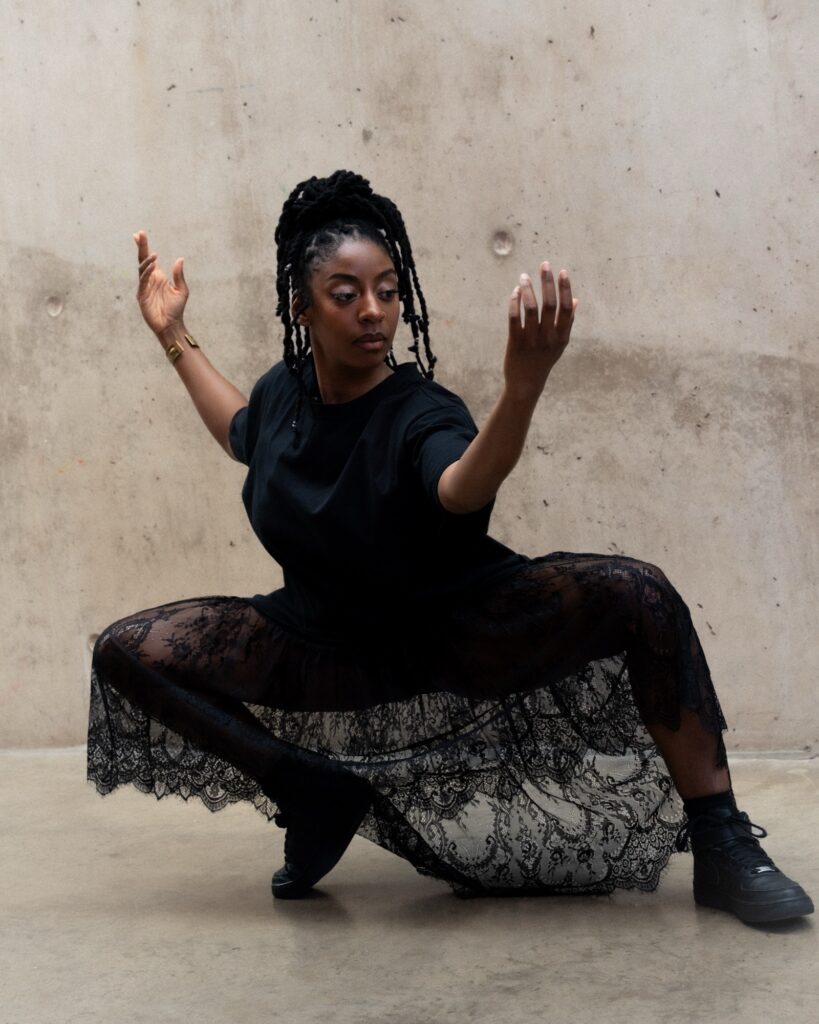
Mele Broomes is an award-winning multidisciplinary artist, who creates performances that sit between theatre, dance and music, crafting storytelling that is both emotional and physical.
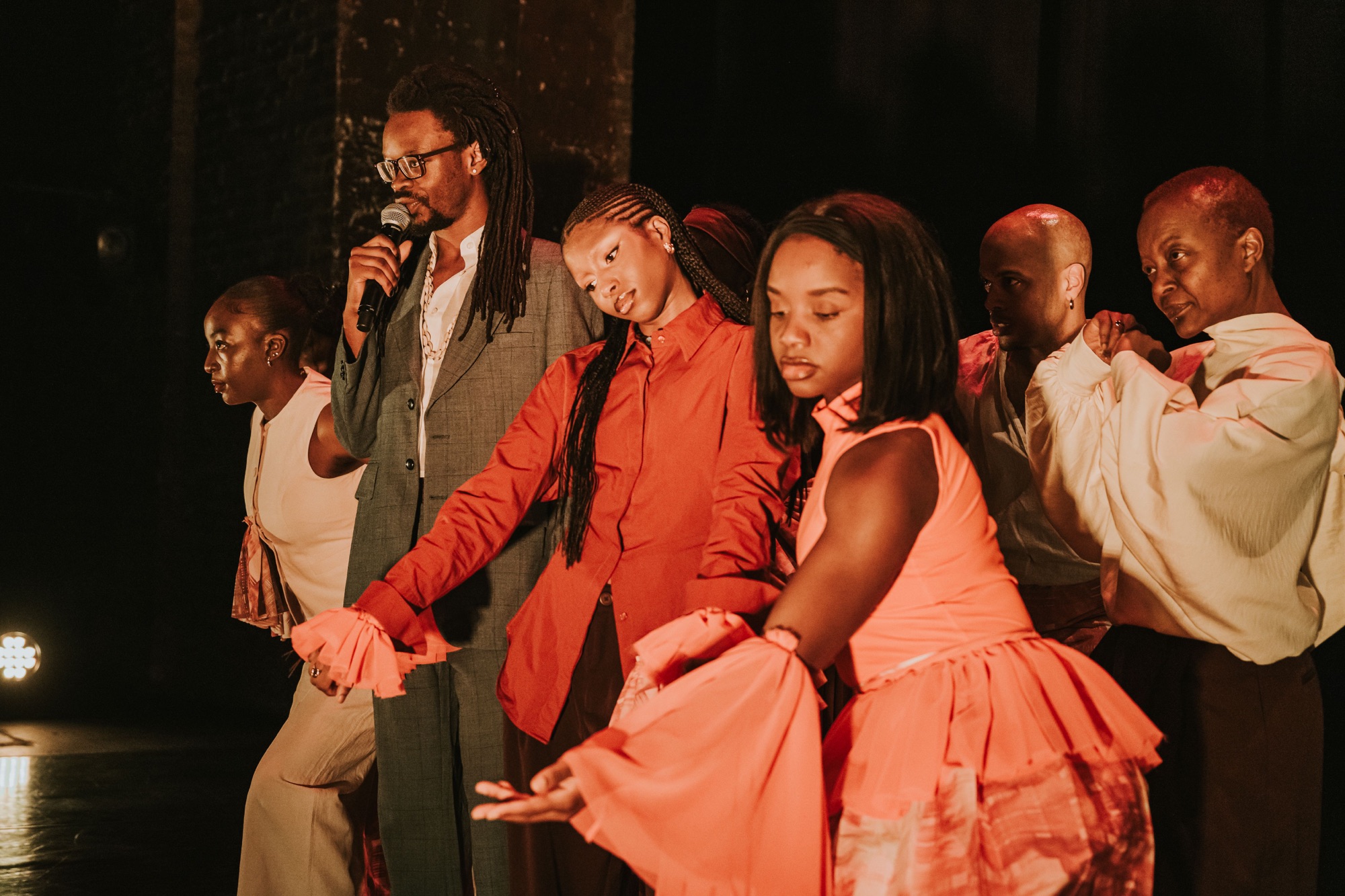
In April 2026, Mele Broomes launched moniqux ensemble – a performance company that presented their debut work Dictations The Heart of the Sea at Tramway, Glasgow.
The premiere introduced the company’s unfolding vision of bringing a sensorial, embodied performance language to Scotland’s stages. The company is Black led and the ensemble featured in the new premiere work.
Q: What made you start your performance company, moniqux ensemble?
A: It has always been an ambition of mine to start a performance company, though I had a lot to navigate before I could fully arrive at this point. Being part of a dance company was an early dream of mine, but through my experiences within dance spaces, and how my body was perceived, I began thinking more deeply about the kinds of artistic environments I wanted to help create instead.
That led me to develop platforms supporting dancers of the African and Caribbean diaspora through Project X Dance. At one stage I thought that would become the dance company itself. Over the following years, my focus expanded into creating wider structures of support and development for artists, which also led to starting Body Remedy, a community interest company supporting artists of colour across different creative disciplines.
Throughout that time, my own artistic practice evolved significantly as I leaned into playing with vocalising my performance which strongly features in my work through warm temperatures. I learned a lot through listening, observing, collaborating, and creating alongside other artists across many development opportunities and projects. I also began building more confidence in my own choreographic and performance voice, particularly through collaborations where music sat at the centre of the work. Recently, this included performing poetry and developing vocal material on Simone Seales’ album Dearest, as well as collaborating with artist and opera singer Roxanne Tataei and A Jones on Immortal Sisterhood Live, led by Gemma Cairney. Long-term collaborator Rhea Lewis has also been an important support behind the scenes throughout this journey and more recently Mobo Agora as we focus on the collaborations between music and dance.
What ultimately made me start moniqux ensemble was recognising that I had arrived at a point where I felt ready to share, direct, and platform creatives through a collective artistic vision. I wanted to develop a company where collaboration and multiple creative voices are genuinely centred within the work.
I believe there is something deeply important about people gathering together to make and experience larger-scale ensemble work. Spending time together in the studio builds trust, strengthens individual practice, and creates space for learning and exchange across disciplines and lived experiences. These are important qualities to nurture as we continue navigating how we live, work, and share space with one another. Beyond the creative dialogue itself, these processes can also provide care, support, and a sense of connection during difficult periods in people’s lives.
For audiences, I want the work to create space for reflection, empathy, imagination, and questioning, while also allowing people to witness ensembles and multidisciplinary artists that feel more reflective of the complexity and diversity of the world we live in.
Q: Tell us about your first company work, Dictations, The Heart of the Sea which premiered recently?
A: Dictations, The Heart of the Sea was an incredibly meaningful experience and an important moment for the beginning of moniqux ensemble. One of the many things that stayed with me most was the sense of joy, care, and connection that developed across the cast and creative team throughout the process. In the lead-up to the performances, I loved reading the comments everyone shared on photos and videos from rehearsals, there was so much encouragement, excitement, pride, and love for one another. It really reflected the spirit of the work and the environment we had created together.
For me, it was important to make something where performers had space to interpret, contribute and shape the work collaboratively. The process became a creative conversation where trust could develop over time, particularly within a larger ensemble setting. That collective way of working is central to moniqux ensemble and to how I want the company to continue developing in the future.
The piece brought together movement, voice, music, and spoken text to explore ideas of belonging, memory, migration, and connection. Much of the work reflected on how people carry family, culture, and histories within themselves, even across distance, change, and time. There was a softness and emotional depth within the performance, while also holding questions around identity, community, and what it means to build home with others.
The work was influenced by the writing of Grace Nichols and approached storytelling through atmosphere, rhythm, sensation, and collective presence rather than through a fixed narrative. The performers moved as both individuals and a shared body, creating shifting worlds and images together that felt fluid, layered, and constantly evolving.
For moniqux ensemble, the premiere marked the beginning of a wider artistic vision, one rooted in ensemble practice, interdisciplinary collaboration, and creating ambitious performance work that feels emotionally rich, musically driven and reflective of a wide range of lived experiences.
Q: What roles do lineage and legacy play in dance?
A: For me, lineage and legacy in dance are deeply connected to people, relationships, and the conditions we create for others to grow, gather and continue. Across Project X, Body Remedy, and now moniqux ensemble, I can see a clear thread of how one body of work has informed the next, not only artistically, but through values, care, collaboration, and community-building.
moniqux ensemble feels like the continuation and gathering of all those experiences. It is where the artistic, collaborative, and organisational learning from the past decade can now exist within a performance company centred around dance, music, movement, and collective creation. The lineage within the company is not only about artistic influence, but also about the people, conversations, collaborations, and communities that have shaped how I work and think.
I also think a lot about lineage in relation to Black cultural practices, oral histories, music, rhythm, embodiment, and the ways knowledge is carried through people and lived experience. So much of what we inherit is held in the body, through gesture, sound, survival, memory, and gathering. That influences how I approach making work and creating spaces for others.
Legacy, for me, is about what continues beyond you. I hope the legacy across all three organisations is one of creating spaces where artists and communities felt seen, held, challenged, connected and able to imagine something larger for themselves and for Scotland’s cultural landscape.
To find out more about Mele Broomes, visit:
https://www.melebroomes.com/ and moniqux ensemble, visit:
https://www.moniqux.com