Words by Lizzy Tan.
Freddie Opoku-Addaie knows the freelance dance sector from the inside. Alongside an impressive career as an independent dance artist, Freddie is Artistic Director and Co-CEO of Dance Umbrella, London’s international dance festival.
Earlier this year, Dance Umbrella announced a major funding award from Arts Council England supported by National Lottery and the British Council for its Diversifying Curatorial Stewardship (DCS) programme, a multi-year initiative (2026–2028) designed to broaden who gets to shape what UK audiences see on stage. I spoke to Freddie about the thinking behind DCS, what curation means when it’s done as care and how the UK dance ecosystem connects to the rest of the world.
Q: You have extensive experience as an independent dance artist and have spoken on the challenges freelancers face. How do you see curators making space for other artists?
A: Inviting a curator hopefully opens up space for artists to be supported – to give them another platform. It’s about widening the conversation, to make space for other freelance voices – whether it’s those who are on stage or those who decide what goes on stage.
It’s really important. If they get support, there’s a trickling effect that helps everyone. It shouldn’t be top down – it should be bottom up.
Q: You’ve previously made a distinction between curator and programmer – what makes curation different?
A: Curation is about care. It’s partly to do with healing. If you’re talking about care, you’re also talking about healing – healing what hasn’t done justice to the work or the material.
As a programmer, you’re putting the whole frame together, whether it’s within an institution or within a structure. You’re trying to put together a programme that reaches audiences. Curation is about how you take care of it.
Q: The DCS has two opportunities: the Guest Curator role and the Curatorial Fellowship. Could you tell me how these work in practice?
A: To me, the Guest Curator and the Curatorial Fellow are doing their own practice. It’s not their job to try and shift how critics, programmers or audiences see work. Actually – it’s a journey, it’s the life journey of the work as well.
The second part of the DCS is the professional development pipeline (the Curatorial Fellowship). The programme runs this year through 2028. We have a couple of years – not to get it ‘right’ immediately, but to keep on editing, the way we do as choreographers in our practice.
This year we’ll have one Guest Curator; next year we’ll have another. Then in the final year – which will also be Dance Umbrella’s 50th anniversary – we’ll potentially have two Guest Curators so that we can bring in wider conversation around visiting artists.
The wider DCS programme is working in partnership with a Steering Group (FABRIC, DanceEast, The Lowry and Aerowaves). So it’s the wider sector – not just national, but international – that we interrogate. We’ve started building a theory of change – where are we within our own organisation, our practices? How do we move these conversations forward? And are we – and our partner organisations – in a position to take this on? One organisation can’t do it on its own.
Q: How do you see the DCS connecting countries through dance?
We’re talking about physical practice – it travels across borders. That’s what movement is about. So, ‘movement’ is a political as well as a social, cultural thing. The geopolitical climate does affect how we make work and how we interact with one another.
For me, working in an international geopolitical ecosystem is about nuanced conversations. If there are two in a room, you start to have a different conversation… which is what the world needs to do right now. This is also about shifting the parameters of taste – who decides what’s good taste or bad taste?
Q: How can dance artists who are interested get involved?
A: Hopefully, we can hold space for artists to network and build the next avenue for their work. That’s really important. Besides the Guest Curators, we will host two residencies, in 2027 and 2028, which will each bring in a group of independent artists.
If you apply as a Guest Curator, we’ll work out how to support you as an organisation. We can support you with a structure, along with the other organisations like Aerowaves, FABRIC, DanceEast, The Lowry. I think that’s what institutions should be doing – supporting people as they navigate the maze of their practice. It’s important that we hold care for every artist, whether their work aligns with us or not.
Q: What’s the thing you most want people to understand about the DCS?
This is a process. But we’re trying to be aware that this should not be an extractive process. This is about co-curating. I hope that we excavate, not extract.
Find out more here: https://danceumbrella.co.uk/2026/05/20/dance-umbrella-announces-major-funding-for-diversifying-curatorial-stewardship-programme/
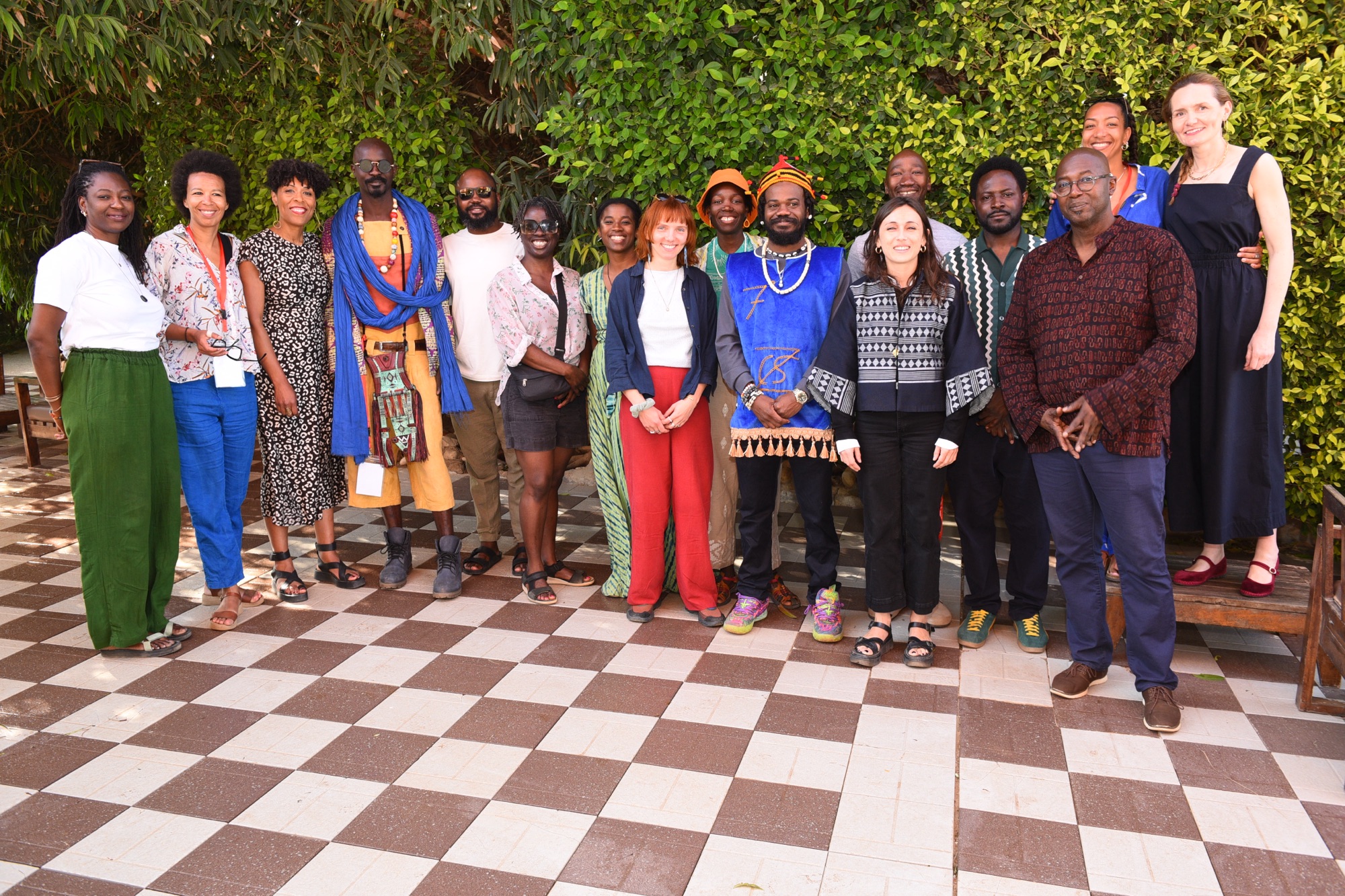
Header image is of artists and curators from the African continent who met for a think tank hosted by Dance Umbrella and British Council during the 2026 African Biennale in Senegal. Photo: Pape Ndao. The artists are: (L-R) Eléna Bougaire (Senegal), Fatima Ndoye (Senegal/Switzerland), Isabel Moura Mendes (Senior Relationship Manager, Theatre and Dance | Arts, British Council UK), Lassina Koné (Mali), Quito Tembe (Mozambique), DU 2026 Guest Programmer Anthea Lewis (UK), Khoudia Touré (Senegal/France), Charlotte Wanda Kachelmann (Germany), Ndèye Mané Touré (Senegal), Zora Snake (Belgium/Cameroon), Morgane Quemener (Country Director Senegal at British Council) , Amala Dianor (Senegal/France), Freddie Opoku-Addaie (Artistic Director & Co-CEO of Dance Umbrella, UK), Patrick Acogny (Senegal/France), Steph Bergé (France/UK/Cameroon), Tania Wilmer (Executive Director & Co-CEO of Dance Umbrella, UK).