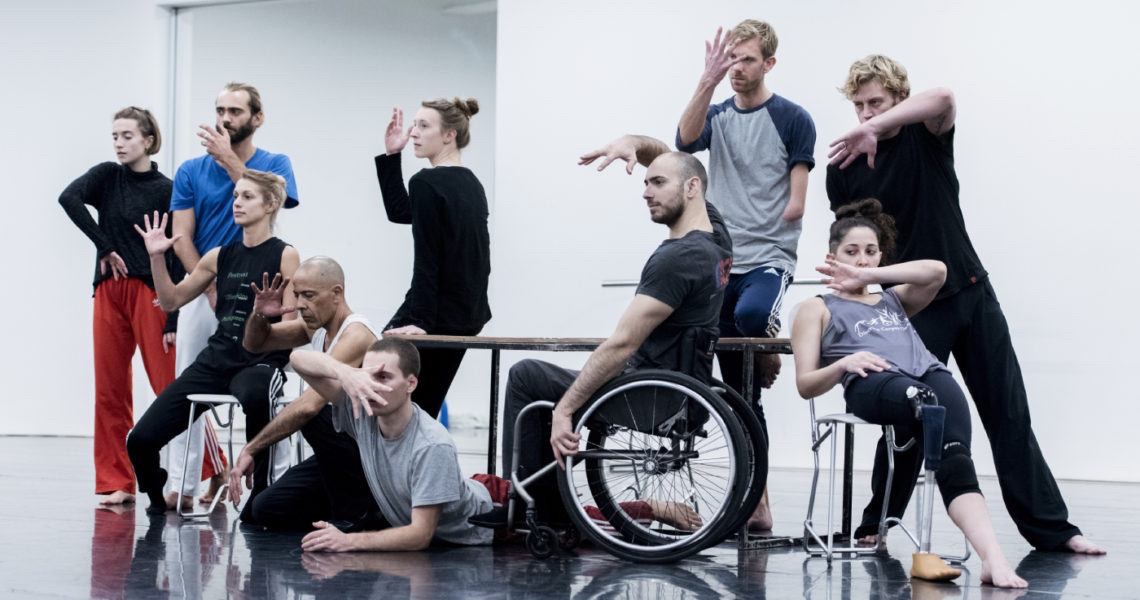
Radical Body, a disability arts organisation providing opportunities and support for disabled artists who are facing barriers in developing careers in the creative sector, has recently published its Disability Data Drive.
Drawing on a survey of 252 disabled arts professionals and interviews with 9 participants, the Disability Data Drive aims to quantify some of the barriers that disabled arts professionals face in their careers and what can be done to create positive change.
In its report, Radical Body highlights the current system does not work for disabled artists. Acknowledging that access should always be person-centred, Disability Data Drive offers thorough and timely evidence identifying problematic trends in existing provisions, providing areas of concern that organisations can focus on when aiming to improve their approach to accessible working.
Key findings: disabled arts professionals rarely have the support they need to thrive
Although many mainstream arts organisations are interested in working with disabled talent, the majority ofdisabled arts professionals find that mainstream arts opportunities cannot be relied on to meet their access needs. Nearly 40% of respondents said that mainstream opportunities rarely or never meet their needs.
As a consequence of working on opportunities that do not meet their needs, disabled workers regularly pay out of pocket for essential access provision.
- 88% of respondents have covered their own access costs. Over 70% of respondents in that group do so often or always.
- 88.9% have then questioned their ability to work in the sector because of their access needs.
On the other hand, when disability led organisations were asked the same question. 29.9% of respondents find that their needs aren’t consistently met, even when opportunities are designed for disabled people. These numbers improve significantly on disability-specific opportunities, which shows that strategic, project-wide approaches to access can really help people. But there is still a lot of work to be done.
Almost 70% of respondents depend on freelance work as their primary source of income, and only around 20% depend on salaried roles. This is typical within the arts sector, but disabled workers face additional financial pressures that significantly worsen the strain of unstable freelance income.
Systems of financial support are not fit for purpose
Access to Work is a government scheme providingpractical and financial support to cover workplace adjustments, specialist equipment, travel costs, and support workers. Despite being an essential support for disabled artists, 85.6% of respondents said that they did not find the Access to Work application process easy to navigate.
Disabled arts professionals struggle to handle the administrative burden of Access to Work applications, and the extensive wait times for claims to be assessed.The current average wait-times for Access to Work applications exceed 35 weeks.
Arts opportunities frequently operate on a tight turnaround, so by the time an artist’s claim is approved, they may be working on an entirely new project where their access needs are different. Could a potential solution be for employers to front the application cost?
Disabled artists face huge financial pressures for an array of reasons including those highlighted in the report. In particular, 71.8% of respondents said the behaviours from employers questioned whether they could work in the sector. Disabled arts professionals are sometimes less confident in their abilities, and more likely to leave the sector. Some of this is due to deliberate ableism and prejudice, but many of the interviewees talked about lack of knowledge, misunderstandings, and assumptions made by organisations.
To read the full report, visit https://www.radicalbodyarts.co.uk/ddd
Researched by:
Elle Chante: Director & Cofounder
Tom Walters: Co-founder & Editor
Alexandra Whiteley: Safeguarding and Access Lead
Miles Murgett: Communications Manager