Words by Qiao Lin Tan.
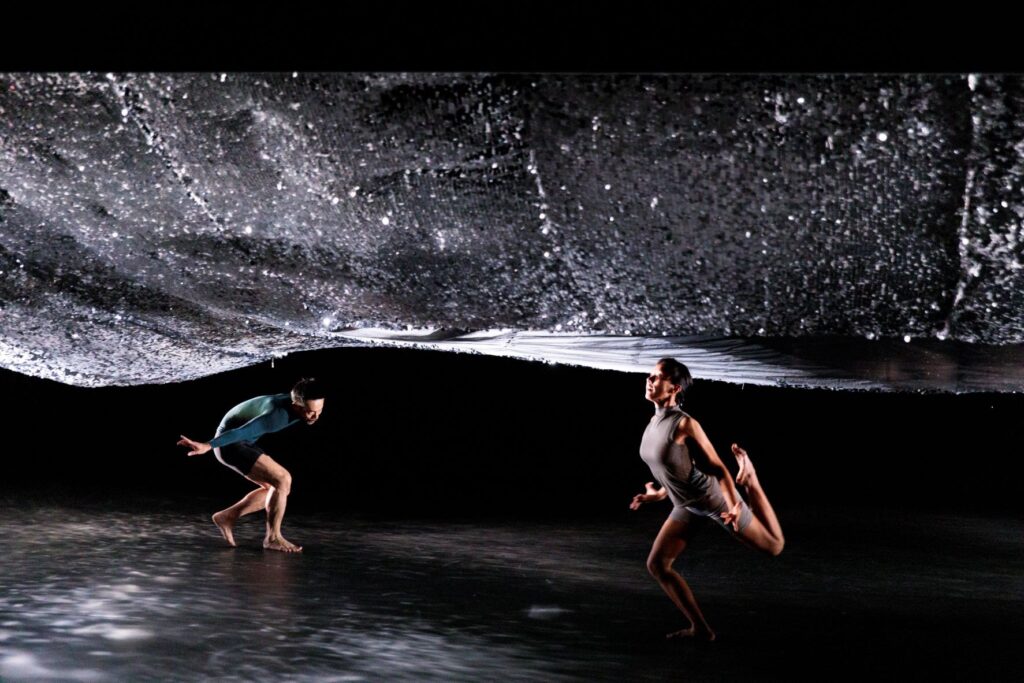
Pichet Klunchun Dance Company performs No.60 as part of Queer East Festival this year, a work that deconstructs the Thai classical dance canon of 59 set poses, in turn proposing a shifting, non-rigid 60th pose. We sat down with choreographer Pichet Klunchun to discuss his work.
Q: Can you tell me more about your experience with the Thai classical dance form Kohn, and what was it like to train in such a traditional art form?
A: I started training with my master and his family. This is not the normal way, the normal training would be to go to a dance school. But I studied with my master from nine to five pm, just me and him together. Very medieval. The character that I studied first was the Giant – there are four different character types in Khon dance, and your master will decide which character you will be. Afterwards, I went to university and changed from my science focus in high school to dance. At university, I studied the Male and Female characters, so now I can do three characters.
Q: What was your experience like training with your master?
A: When you train in a dance school, you have two or three hour lessons before changing class, you get a degree etcetera… But the way I trained, I didn’t train in the studio – I trained at his house, the temple, everywhere! I trained on his time, whenever he was free. There was no set space or timing, everything was dependent on him. I could spend six hours on one movement continuously and spend the whole day like that, until he said okay and gave me the next movement to work on. I trained with him for many years, until he passed away.
Q: You’ve been working with deconstructing the 59 positions of Mae Bot Yae for twenty years now. What was it that put you on that journey?
A: One of the biggest questions I had was: how do I keep my dance career going and how can I support the continued existence of my company? I’d worked for ten years by then, and started looking at the history of dance companies in Southeast Asia – there aren’t many companies, and the ones that existed lasted ten to twenty years before they closed down. If I wanted my company and my dance career to continue existing, I needed to keep developing our work and grow our relevance to the Thai community. I had to find my own technique and my own personal identity.
When the company first started, we did Nijinsky Siam (2010), Black and White (2011) and Dancing with Death (2014), which all drew on material from Thai classical, folk and shadow puppet practices, but it was always extending on a previous choreographer’s work. After we’ve done all that, I felt that everything was used up. No material left to use at all. I thought, “I have to find another new idea”. I looked at famous companies – the companies of people like Martha Graham, Pina Bausch and William Forsythe – and they all had their own concepts and ideas. When you watch them, you can clearly see the Graham technique or the Cunningham technique in their work. How can people recognise the Pichet Klunchun Dance Company in the same way? That was when I had the idea to start rethinking the Mae Bot Yae, because this is the basic training vocabulary of 59 poses that all Thai classical dancers learn. If I could understand the base routine training, I could create something new.
Q: What was it like at the start to go on such a journey?
A: I had no idea what to do at the start. When I created Nijinsky Siam, I was trying to understand how the Western eye in 1910 looked at Asian dances. I saw how Nijinsky looked at Thai classical dances and changed this aspect of the movement or that aspect to suit his needs. I thought, okay, if I wanted my own technique, I had to use what I was familiar with – my traditional training from my master – but as myself. If my master once told me I had to do three steps, I’ll do four instead – why not? And if I like it and find it beautiful, then I’ll keep it.
When I did Black and White, it was about deconstructing the form and shape of Thai classical dance. By thinking about the space beyond the immediate body, the shapes behind and outside of the body, I could jump out of the traditional meanings the movements were associated with in Thai classical dance, and create new meaning even from the same positions.
With each production I’ve done, I’ve played around with different elements of the classical tradition. With this piece No.60, I’ve brought together the six elements that I’ve discovered from my past twenty years of working.
Q: Can you explain the principles of No.60?
A: We have six elements – Circle and Curve, Synchronised Limbs, Axis Points, External Body Space, Shifting Relations and Energy – that we’ve developed into a diagram. Sometimes we call this the DNA of Thai classical dance. It’s not about the specific form or shape the movement takes. Or you could also compare it to the main ingredients needed to cook Thai food. When I put all six elements together, ah, this is Thai food. The taste is right.
With these six elements, I can work with different dancers, not just those trained in Thai classical dance. When I work with a hip hop dancer, a ballet dancer or a contemporary dancer, when we work with, let’s say the Circle and Curve idea, it turns from a concept within Thai classical dance to an international idea. Although my circle and curve is different from a hip hop dancer’s circle and curve, we can still speak in the same language. No.60 is a bit like a tree – it’s dependent on the dancer, not me as the choreographer. When we work with the diagram, each dancer always reads them differently.
The diagram we created – it’s a remapping of the old tradition. And the map is important because you never get lost. When you work in the contemporary way and you run out of the tradition, you can still have the map in your mind. You can return back to first position again. And it’s important to note that this map is not a method of notation, like Labanotation. It’s not a way of scribing and remembering movements that have been done before; it’s a springboard for future movements that haven’t been done yet.
Q: No.60 is part of this year’s Queer East Festival. How does the work sit within the context of the festival?
A: No.60 is not a tradition, you see? No.60 is not that, it’s not this, it’s not those. Queer is not male, queer is not female. It’s something. The queer concept is about being free. To be free and speak and talk using their own language. I think No.60 is a concept, not a dance. It’s very related and connected to queerness as a concept.
No.60 will be performed at The Place on Tuesday 19th May at 7.30pm.