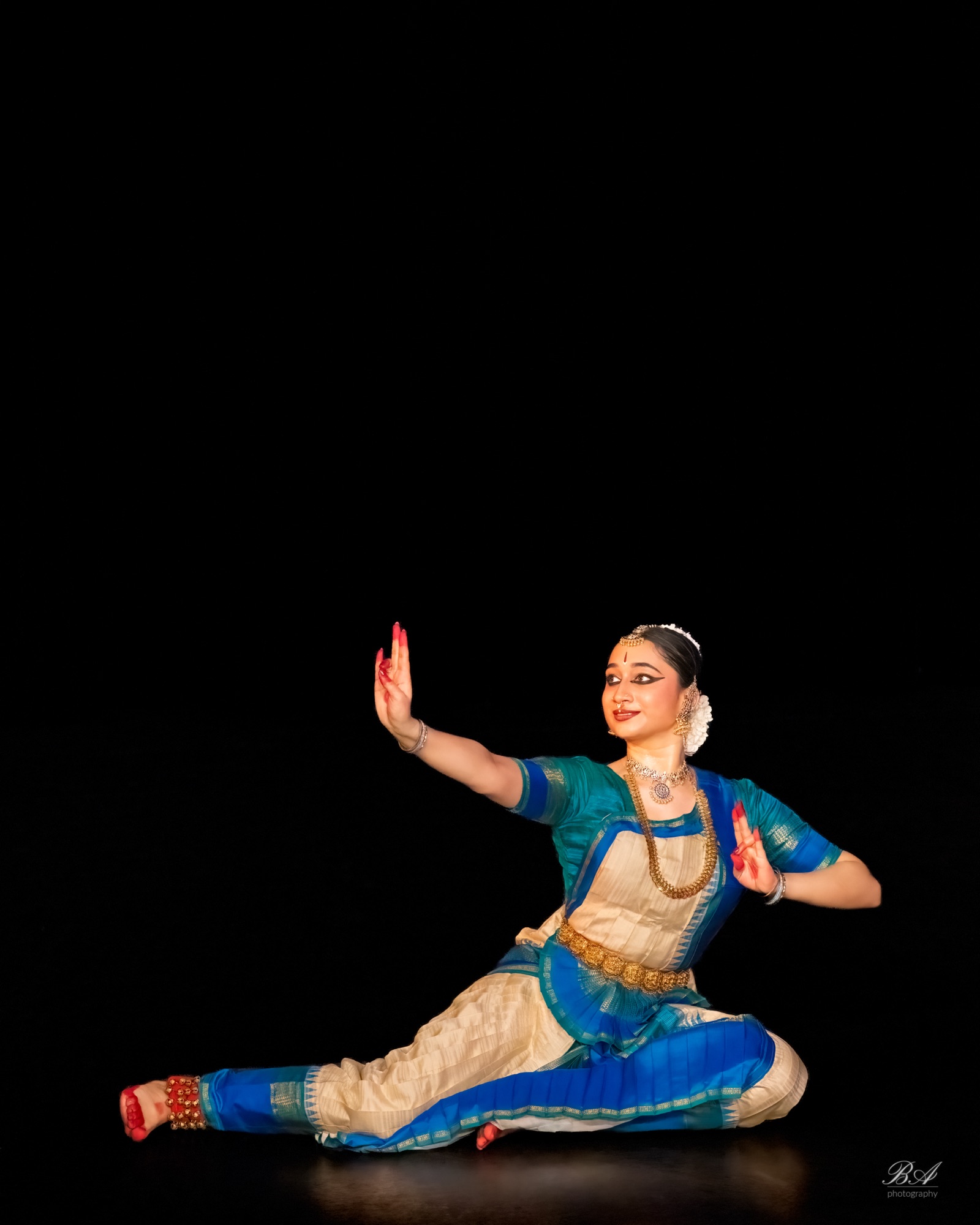
Words by Dr. Debanjali Biswas.
50 years after Naseem Khan’s influential text ‘The Arts Britain Ignores’ (1976) encouraged British cultural institutions to build an infrastructure for diversity and inclusion towards ‘BAME’ (Black, Asian, Minority Ethnic) communities, today, culturally diverse ‘ethnic’ arts serve as valuable sites of agency, transformation, and subversion. Across the UK, South Asian dance has attained stronger presence. One emerging organisation in the performing arts sector is London Adavu – a community-driven, not-for-profit hub for Indian classical dancers. Held in March 2026, London Margazhi festival is a dynamic step towards celebrating the endurance of classical technique of Bharatanatyam dance and Carnatic music.
As one of the eight Indian classical dances, Bharatanatyam is recognised globally. Its longue durée is evident in its rigorous training systems towards producing professional performers spanning centuries of evolution, colonial intervention and elite subjugation, reinvention, and transnational collaboration. Scholarship on histories and practicesreveal much about the place of Bharatanatyam in India’s past and current heritage, affording a useful lens to understand the interplay of region, religion, nation, gender, caste, and class – some of it is perceptible in diasporic spaces too.
Mentorship in London Margazhi
Over two days, London Margazhi was hosted at City Academy in London’s Hackney. During the day, one could stroll through the stalls of Margazhi Mela brimming with crafts, joyous energy, and of course, food, with music sessions and panel discussions as interlude.
It takes courage to knock on doors for the first time. Festival director Amritha Jayakrishnan began with community fundraising and days before the festival, received funding from Arts Council England’s National Lottery Project. As London Adavu’s founder and a stellar Bharatanatyam and Kuchipudi dancer herself, Amritha imagined London Margazhi as an alternate model for artistic growth through community-led, artist-centred approach.
Learning through mentorship and camaraderie is the company’s long-term goal, and art-making is a lonesome process. Amritha’s festival planning include a hybrid residency model where dancers re/create their choreographies through online as well as in-person artistic and intellectual engagement with mentors and peers. The mentors’ roles are, of course, crucial to this task. They inquire what sits at the threshold of creativity, skills, and imagination, and coach them to completion. Mentorship sets up a parallel, even analternative pedagogy and methodology to guru-shishya-parampara, a conventional system of discipleship to transmit knowledge of the arts. Pallavi Anand, Poorna Hariharan, Meghana Lokabhirama Rajuand and Amritha Jayakrishnan guided two mentees each. They were also the Nattuvanars during the performance reciting the rhythmic sollukattu, keeping time on cymbals with precision.
Adhya Shastry, Anjali Sivanandakumar, Supritha Aithal, Adithi Ravi Prakash, Rachana Suresh Kumar, Rajeswari Ramaswamy, Kavya Iyer, and Varun Shivakumar were selected from 52 applicants. The selection panel was headed by Vidhya Subramanian and Mavin Khoo. Bharatanatyam has an inexhaustible repertoire stretching across distinct bani-s – stylistic traditions. In their hour-long presentations, dancers performed selective pieces from margam movingthrough moods, skills, and rhythm. All dancers demonstrated strong belief in their artistic vision while cautiously exploring new formats of presenting solos.
Lords and Lovers
Union and separation of lovers echoing spiritual surrender are central to Bharatanatyam repertoire. In Nee Indha Mayam in Raga Dhanyasi composed by Sri Papanasam Sivan, Adhya depicts a lovelorn heroine with the soul of devotee reflecting on joys shared with Krishna and asks why he is so indifferent. It also felt like a search for self. Her jathi-s were crisp, emotional tension to unite past with present were danced with clarity and precision.
Jalaja bandhu – Alarshara Parithapam is an immersion into famous Manipravala Sringara Padam of Maharaja Swathi Tirunal in Raga Surati. Anjali was enchanting in her abhinaya detailing Sri Vishnu Shankar’s choreography. She attires herself in anticipation of her paramour as the Vasakasajja Nayika, leaving a lasting impression as an Indian miniature in making.
Adithi possesses a fluid, luminous style, which amply shone through Samiyai Azhaiththu Vadi, a composition of the Thanjavur Quartet set to Raga Khamas. The dancer is deliriously in love with Sundareswara who is Shiva. Her pivots between the robust tandava of Shiva and demure lasya of the nayika shows mastery over the form. The two segments which stood out to me were one in which she prepares a musk-dipped letter, and the her wonder at witnessing Sundareswara’s procession at Madurai.
Rachana was fully engrossed as a yearning heroine in Sri Lalgudi Jayaraman’s Charukesi Varnam Innun en manam. The beauty of the choreography is in the interweaving of demanding jathi-s with soulful melody, the dancer executed both meticulously. As a contrast to the patient nayika, in Pattabhiramayya’s Javali in Raga Purvikalyani she becomes flirty, feigning anger. To Smt. Pushkala Gopal’s choreography, she demands “where are the adornments you promised me, what of your promises to me?”
Rajeshwari delves into a ‘contemporary exploration of love in the digital age’. When it came to expressing theache of unfulfilled love while dancing the Bhairavi Varnam composed by Sri Ponniah Pillai, her dexterity in abhinaya emerged. Interpreting with restraint, she reflects a young woman caught between the paradox of longing and indifference.
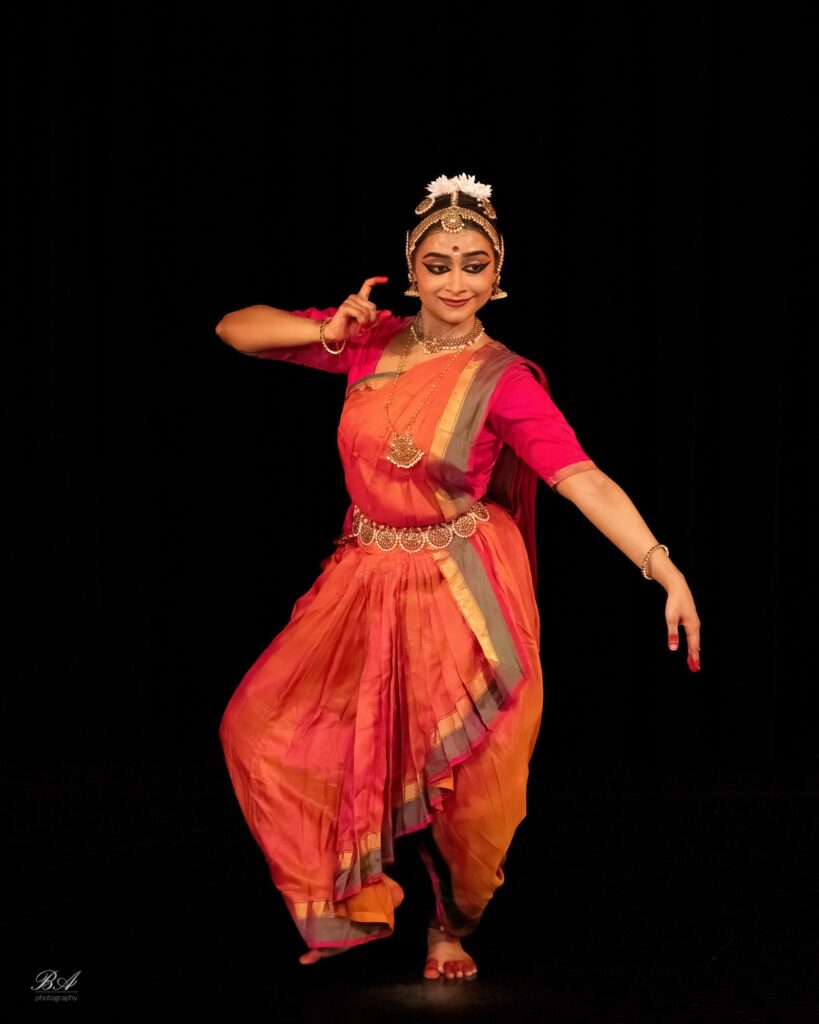
As a lover-in-waiting, in the varnam Swamiyei Ninneindullam, Kavya befriends a bird to express her paramour’s unfulfilled promises. The absent lover remains absent, mostly, the chatter with the bird, enlivened by playful gestures and crisply executed jathi-s, become central to the choreography. Depicting twisting vines and branches of the forest and flight of the feathered friend while staying grounded as a heroine was a pleasure to watch.
Varun’s poise in the Varnam was commendable. In Sri K. N. Dandayudhapani Pillai’s composition on Navaragamalika Swamiyai Azhaithodi Vaa, one could see geometric patterns emerging as Varun painted avivid description of Shiva and his adornments. The conversation between the protagonist and the sakhi as well as his migrations between rigorous trikala jathi and charana swaram were deft, uncluttered.
Honouring Mothering Figures
Women are oft-performed as powerful, otherworldly goddesses or mothers from various myth and lore. Yet two dancers surprised the audience with their renditions of mothering figures.
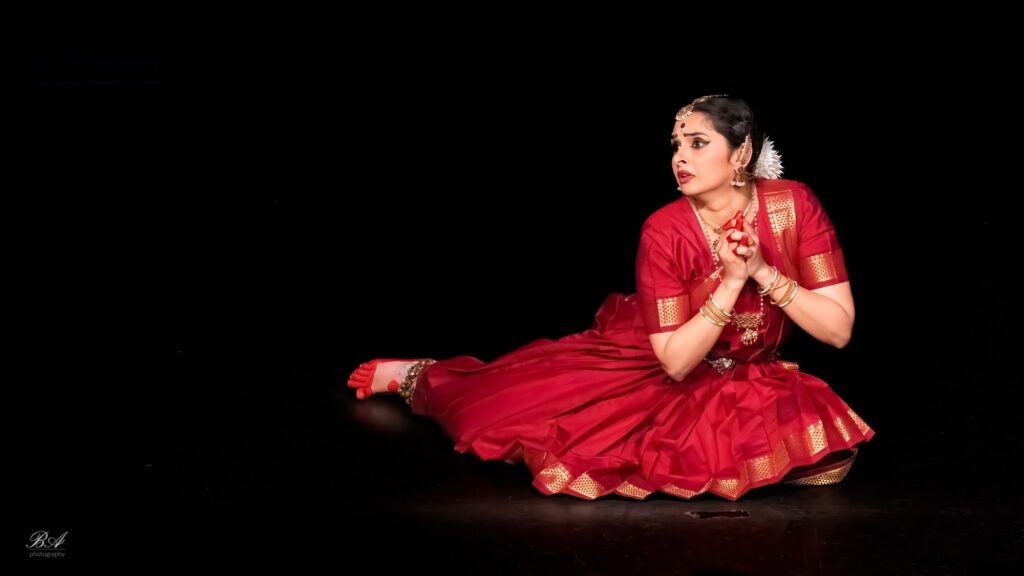
Supritha Aithal’s thematic margam was thick with grief – she dedicated it to the search that engulfed her after the sudden loss of her mother. She began with saint Adi Shankaracharya’s Maatru Panchakam. It is a lament and a message of gratitude to mothers. Then swaying between praising the divine mother in Amba Kamakshi Swarajathi set to Raga Bhairavi and Kannada lullabies Malagisennanu taye and Malago malagenna mariye, Supritha pleaded to remain in a dreamlike state where she feels no grief. Kavya Iyer’s piece initially choreographed by her mother and grandmother, was heartwarming. In a poignant re-imagination of her mother rediscovering her needs and desires as an artist, Kavya allowed each gestures to breathe in a composition that offered ample scope for abhinaya. Musically, even with the incorporation of popular Hindi songs, the portraits of maternal absence and presence did not stutter. Each act of memoryarticulated by gestures, helped Supritha and Kavya to ascend in their choreographies with their mothers,journeying through time.
Dedicated to goddess Meenakshi, Anjali’s abhinaya synchronised with the essence of Angayarkanni Varnam. Choreographed by Sri RLV Anand, she depicted nine emotions woven to nine ragas with vivacity and sensuousness. The enactments of disgust – bibhatsam and anger – raudram rasas were especially compelling.
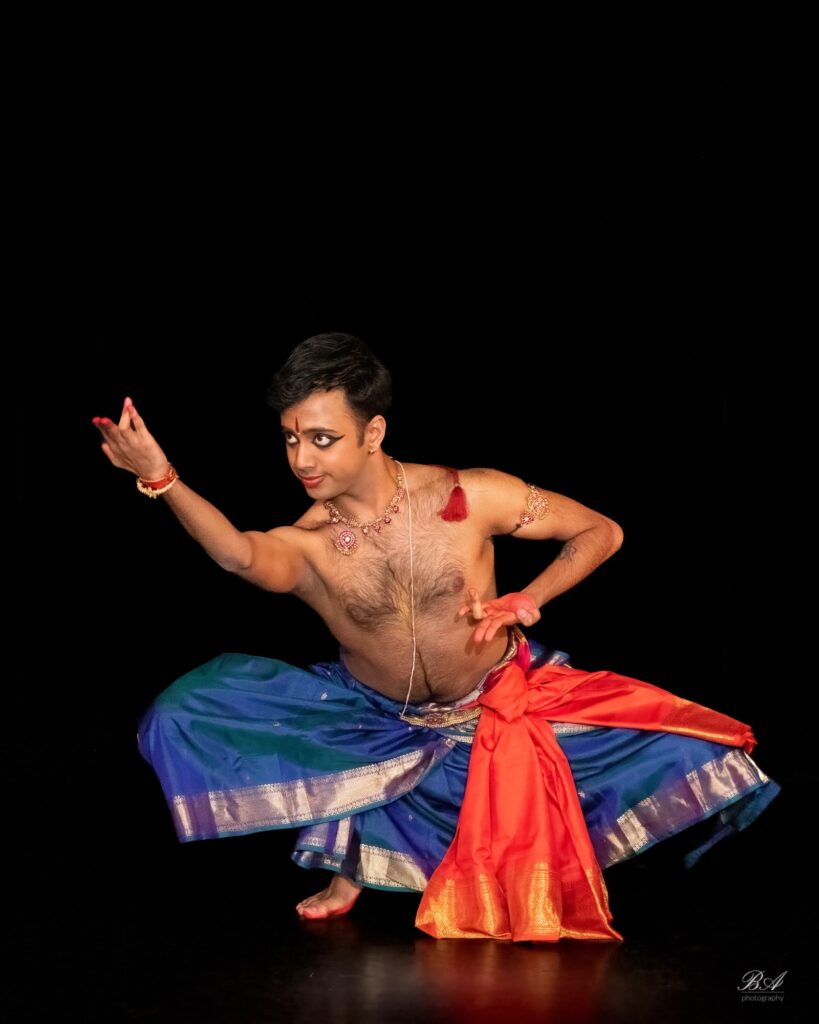
The finale to the festival was danced by Varun. Closing concerts with compositions based on Raga Bhairavi named after the awe-inspiring divinity is a time-honoured tradition. Sung in Raga Sindhu Bhairavi and dedicated to Bhavani, the choreography was a promise of an arrival.
Pure Dance
Intricate footwork is the cornerstone of nritta or pure dance segments. Dancers demonstrated prowess in meeting Prathap Ramachandra’s flying fingers on the percussion with jathi-s in the Adi and Rupak tala-s, as well as achieving seamlessness in Theermanam-s.
Adhya’s strong core and stamina was seen in a spirited rendition of Mishra Alarippu. She concluded her recital with Simhendramadhyama Thillana choreographed by her guru, Sri Praveen Kumar, showing clarity in lines and a composed stage presence. Adithi danced a Jathiswaram choreographed by Sri Shankar Kandasamy, set to Raga Nasikabhushani engaging deeply with the foundational vocabulary of the form with vitality. The nritta segments in Adithi and Rachana’s portrayals of mischievous Krishna and Anjali’s depiction of majesty of Mahaganapathi were exact, surefooted, with chiselled arm movements. Rajeshwari’s experimental invocation to the sun was roughly hewn, and with a faint unevenness. But in Desh Thillana narrating the birth of warrior god Murugan choreographed by Sri Sheejith Krishna, she restored her command over nrittaand the devotional passages with flair. The full-bodied motifs woven on ground in Kavya’s ode to earth Bhoomianjali allowed the audience to feel stillness, while Varun’s genuine joy in displaying athleticism of Pancha Jathi Maalika Alarippu bringing five jathi-s within single rhythmic meter left them soaring. His dances brought the festival to an end.
Practicing Joy
The live ensemble had the dancers curl over their music as a beacon. Vocalists Pooja Naarayan and Vamshrikrishna Vishnudas, percussionist Prathap Ramachandra and flautist Vijay Venkat created a soulful soundscape for all the dancers, flitting from raga to raga for the audience to savour. The performances were excellently illuminated by Sivahami Sivashankar keeping in tandem with shifting emotions of the choreographies.
Amritha reminisces: a member of the audience told her “I didn’t expect to feel this connected to something I don’t fully understand.” The artists commended her for holding space –they felt seen, supported, enough to take risks with their artistic ambitions. They collectively realised there is an appetite for a common space – for depth, for dialogue, and to extend breadth of practice beyond graded exams and grand solo debuts.
London Margazhi is London Adavu’s first festival and artist development platform for Indian classical dance. Exciting times lay ahead for the young company! Since 2019, it has run regular artist-led Bharatanatyam meet-ups, and conducted workshops, masterclasses and summer schools by stalwarts of the form. Let us hope more curators and entrepreneurs will gather to rally for the performing arts like London Adavu, and perhaps recalibrate how dances of the global majority can be sustained for a lifetime in the UK.
Author
Dr. Debanjali Biswas is an anthropologist of performance cultures and creative industries, a Manipuri practitioner, and a performance-maker.
Header image of Rachana by Bheem Adavikolanu.