Words by Francesca Matthys.
My body does the talking for me; dance helps to speak what you can’t say in the best ways
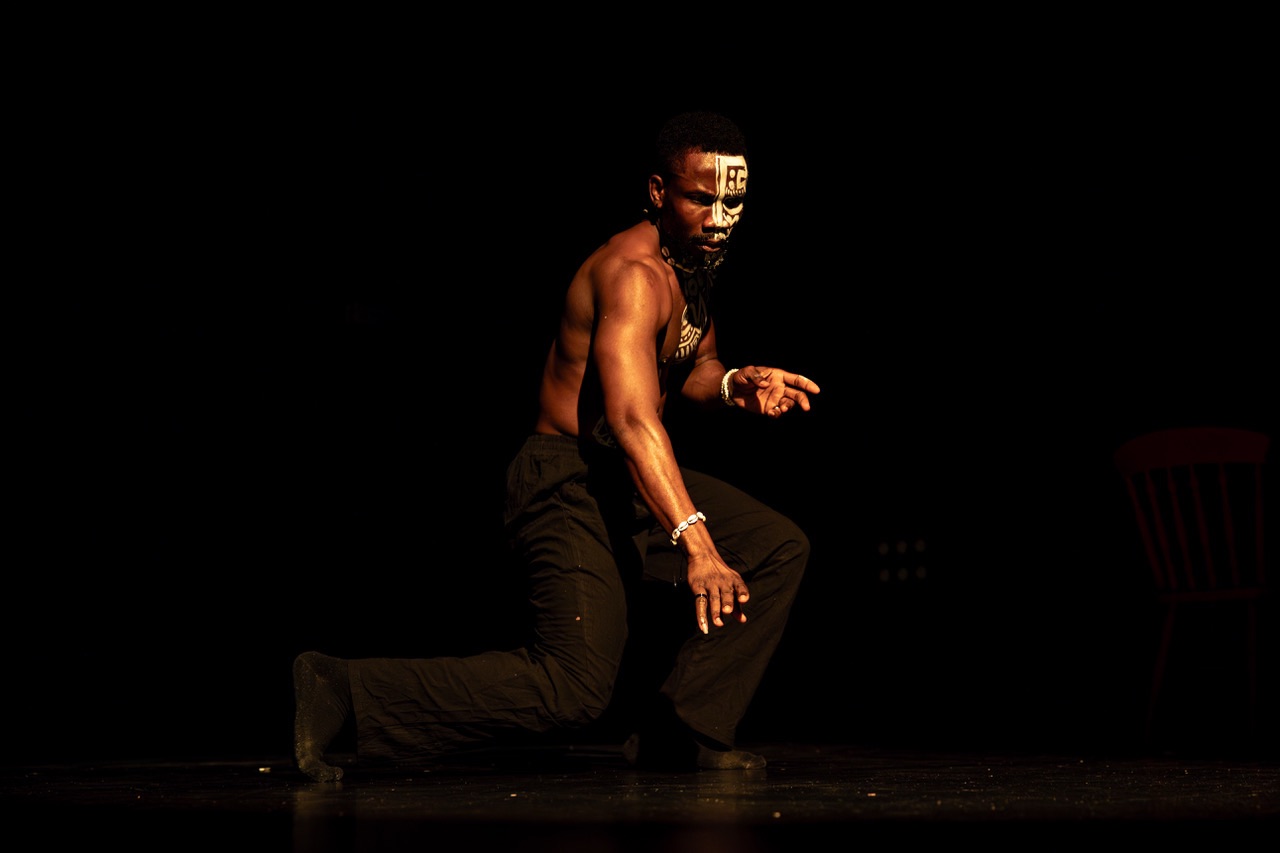
Joachim Keke is a Bradford-based multidisciplinary dance artist from Nigeria, who blends his strong roots in traditional African Theatre with Afro Contemporary and Afro-fusion movements to explore lived experiences through themes of identity, culture, memory. We caught up with him about inclusive community practice, African diasporic dance, multidisciplinary practice and his latest solo work Clinic of Remembering supported by Theatre in the Mill, Festival of New Work.
“I have always been dancing. As a means of survival as an African kid, we danced and went for competitions. For us, dancing was a form of expression, a way of life. It was something we knew to do best without even thinking about it. Rooted in African culture, it was natural for us to perform the traditional African dances, coupled with being influenced by the Western world, which has the likes of Michael Jackson and Chris Brown. We were fascinated by African traditional dance as well as Western Hip Hop. We were able to fuse the two of these and create our own way of expressing ourselves. That was the foundation of my dancing!’
Keke shares his background as a child through the arts, jumping on all opportunities such as film and dance to support his livelihood. It is an illustration of how his background in Nigeria has informed a big part of his identity as an artist traversing multiple disciplines abroad.
As an African artist myself who has recently uprooted their life to further pursue a career in the arts abroad, I resonate with Keke who relocated here three years ago. Coming to the UK has been a different experience for me; there are different undertones in culture and people. “This affects the experiences of migrants such as myself” shares Keke.
His journey here however has opened up space for him to share his passion for African Diasporic dances, fuelling budding connections and working with organisations such as Yorkshire Dance’s project ‘So Far, So Good’ as a choreographer working with elderly groups. This highlights Keke’s inclusive community aspect of his practice.
“Over here, there is this fascination about wanting to know about African culture. I try as much as possible to make this work accessible for people, including people with different abilities. The reception is always so welcoming, allowing me to continue and keep going! They always want to embrace the culture and embrace what I am bringing to the table.”
Keke’s practice as a dance facilitator is embedded in inclusivity and care through African Diasporic dance and is further extended through to his latest work Clinic of Remembrance. The work is a response to the call out ‘Speculative Care’ looking at what care may look like in the future with the emergence of AI amongst other societal developments or breakdowns. Clinic of Remembrance delves into the experience of an African migrant’s experience of care in the UK.
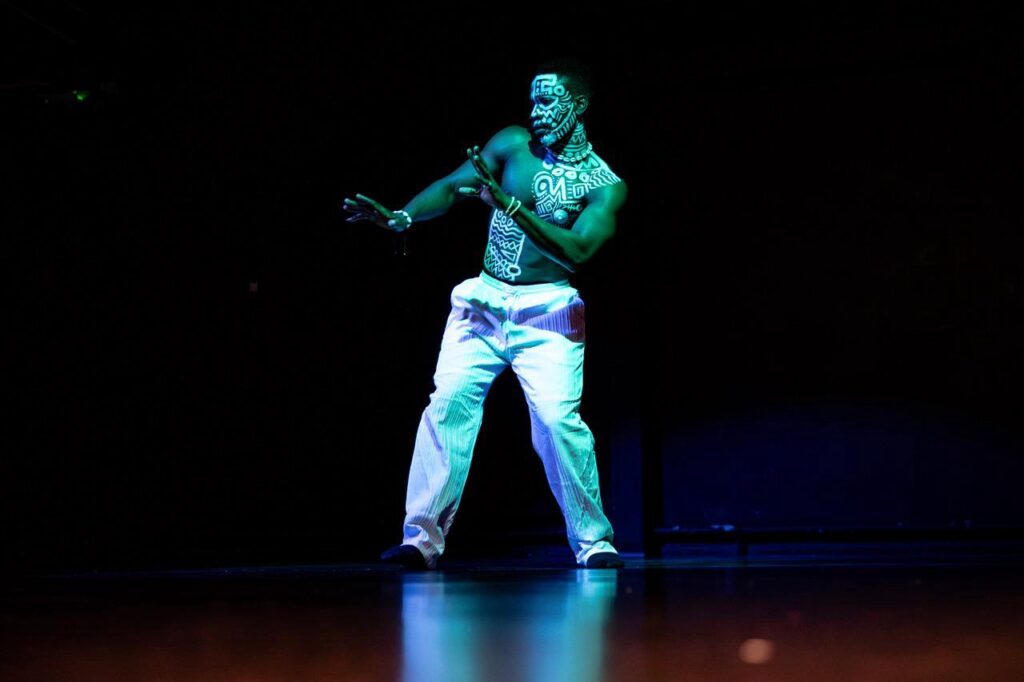
Staying true to his approach to the body as an archive of memories and feelings from childhood up to adulthood, the work reveals the realities of what it means to be a Black person seeking help from medical institutions such as the NHS, including experiences such as arduous waiting time, to feeling as if you are just a number and not a human fully being seen.
Keke also shares other cultural differences in the UK such as giving up a seat on public transport for an elderly person (as a sign of respect) being met with disregard and seen as an act of pity.
“Before, care was a language we all spoke without needing translations, but somewhere between airports and postcodes that language got lost. Here in this place, care sounds different, careful and conditional text integrated into the performance.”
In this work he also holds and extends elements of cultural traditions such as ‘Call and Response’ in relation to these notions of care. “Call and response was a way of teaching. Whether you had a mother, father or aunty telling you a story, the best way for most stories to stick was to infuse folklore and folk songs. Even if you don’t remember any story, the song that you sung helps to remember the moral of the story.”
This element in the work for Keke was a way to involve the audience and reassure them that he sees them and that they are together on the journey. That they are cared for. The performers are also participants in the journey. “Today we are all rememberers and I am a vessel” – these are words uttered by Keke in the performance.
Within the work we see Keke teaching the audience a call and response chant followed by inviting audience members onto stage and engaging them in a short guided movement before continuing the more conventional audience/performer dynamic. It is clear that they easily respond to this, and this approach certainly has potential to create common ground for everyone in the space, possibly allowing for the content of the work to be received in a more open and relaxed state. The warmth of this moment of audience participation is certainly heartwarming even through a screen.
As an artist beginning to develop their artistic practice and methodology, Keke is confident in his ability to create longevity for his work through honoring his lineage as an African where interdisciplinary work is inherent.
“I don’t like being caged in, I fuse dance styles together, the JoJo style.”
His other performance works to date include Still I Rise inspired by Maya Angelou’s poem as well as Man Up interrogating societal expectations of masculinity within his familiar contexts. His other works in the pipeline revolve around the themes of migration, memory, care, culture and ritual with a keen and consistent focus on promoting African culture.