Trigger warning: abuse.
Last week, dancer and choreographer Phoebe Lindenbach premiered her new film SHE KNOWS, which puts a spotlight on violence against women.
The film, captured by King Cat Productions, uses the white walls of a dance studio to lay bare the terrible fact 1 in 3 women experience either physical or sexual violence in their lifetime.
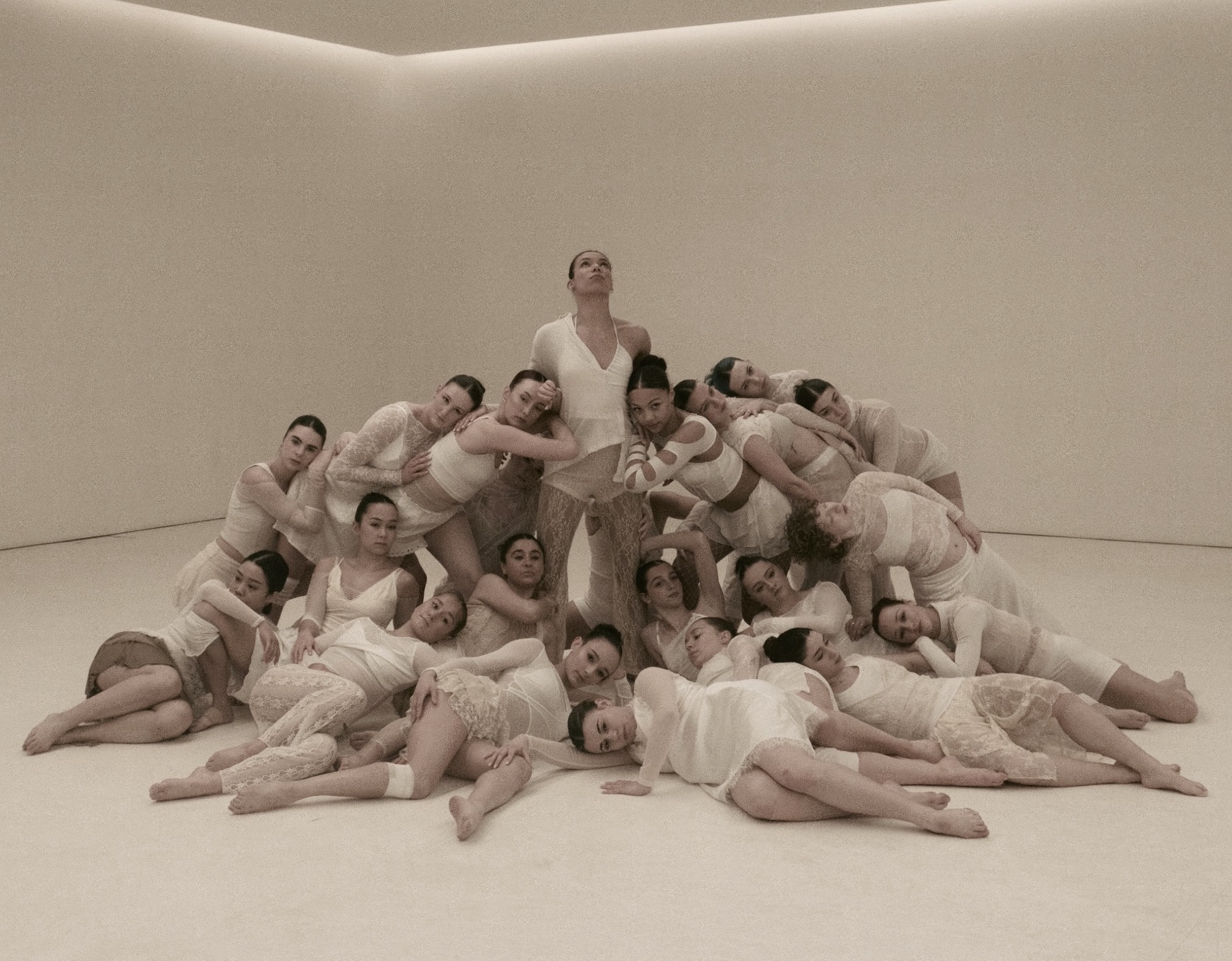
Featuring white costumes by Genevieve LaValle, SHE KNOWS features a plethora of female/female-identifying dancers who highlight the experiences of those facing violence through the art form of dance. Moving to Sofia Isella’s song Everybody Supports Women, SHE KNOWS makes an important message on the prevalence of this violence and the stigmas, anxieties and prejudices that many women face which prevent them from stepping forward.
SHE KNOWS opens with a camera close-up on a female dancer. The camera then zooms out to show how this dancer is one of many; they lie and sit around her closely and idolatrous like a group of people in a Renaissance painting.
Intrinsic to the choreography are the words in Isella’s song. Isella sings of hair, female identity and the misconceptions women face, and Lindenbach’s choreography acts as a key vehicle to bring these lyrics to life – to reality. What this achieves is a more palpable and deeper sense of the challenges, trials and indeed violence that women face.
The choreography itself is liberative, loose and sexy – a reclamation of the stereotypes projected onto women. At the same time, it is also powerful, fierce and strong.
SHE KNOWS is kind of divided into parts, with the first and second quietly setting the scene and nodding to this aspect of reclamation. A third of the way through the film, a dancer wipes her eyes, her mascara marking her face. In the film this symbolises a tonal shift – there are more group moments, swooping lifts and duets, more use of levels, as the dancers drop and pick each other back up. A fight for resilience.
This fight for resilience develops into a literal fight at one point; a very overt, disturbing and moving moment where the film’s topic of violence reaches its crescendo. Then there is a bit of a switch when the bright lights of the dance studio go off and start to flicker like a strobe, and it seems this is a transition into the final part.
The final part itself is a rallying and powerful cry for women. Lindenbach has created a rousing and emotional film that at the end leaves you with a lump in your throat.