Words by Eoin Fenton.
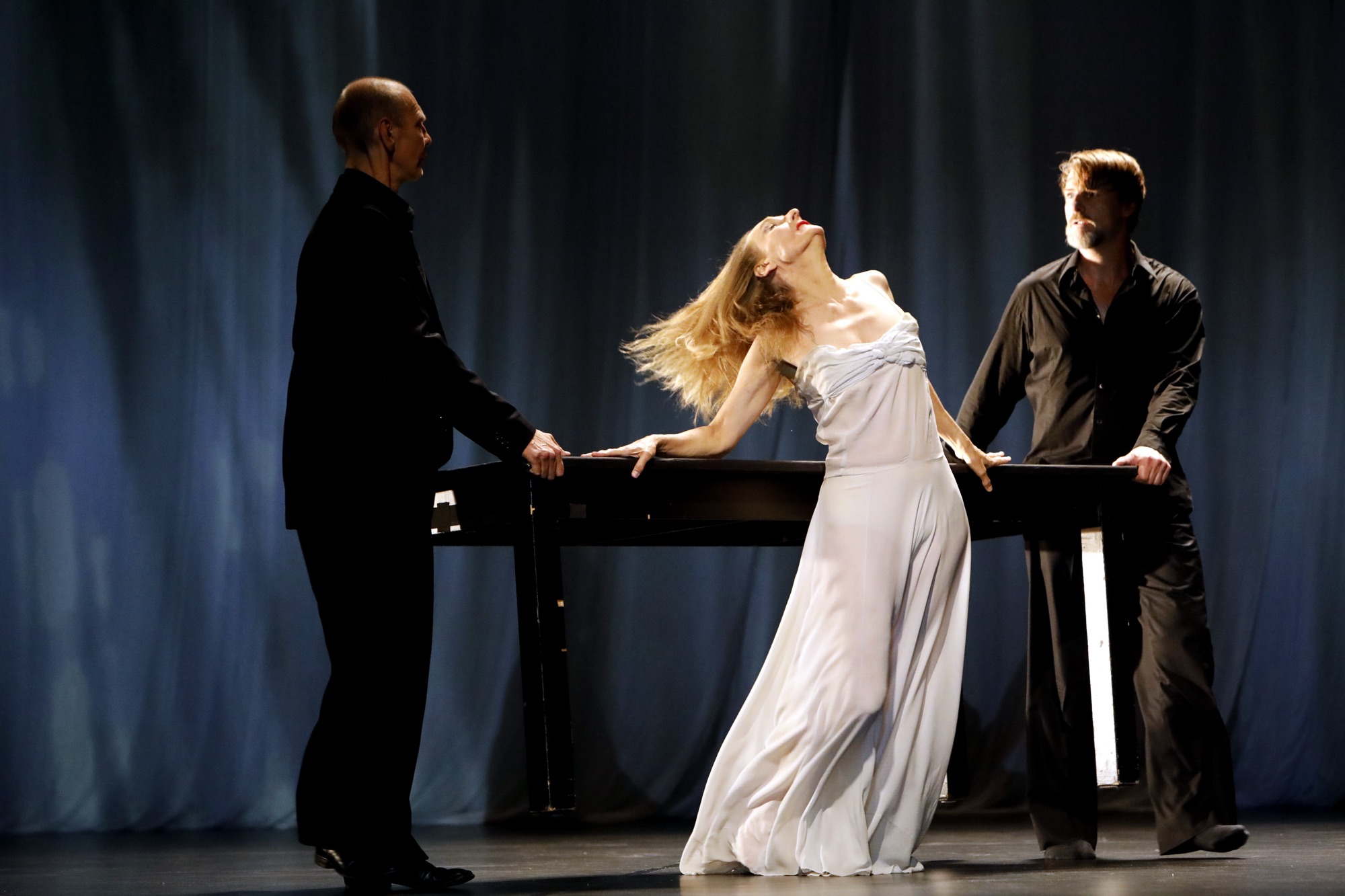
Though Winter has been especially brutal this year, Spring is rounding the corner. To UK audiences, this of course means one thing: the return of Tanztheater Wuppertal to Sadler’s Wells. This time the company presents a work never before seen in the city by its legendary choreographer, the late Pina Bausch, Sweet Mambo.
Before arriving for their eight show stint in February, which has already sold strongly, I spoke with Julie Shanahan. One of the original cast members of Sweet Mambo and a longtime collaborator, she is full of memories of her time in Wuppertal. Smiling, thoughtful and quick to laugh, her sunniness is a far cry from the agony she endures in some of Pina’s heavier works.
This is the first time Sweet Mambo is coming to London, which is a bit of a surprise considering the relationship Tanztheater Wuppertal has with Sadler’s Wells. How does it feel to bring this piece to London?
It’s about time, we aren’t getting any younger! It’s actually beautiful, we just did a tour to Japan with the same cast. It’s very unusual that we still have so many originals with some dancers being 70…
And still going!
Absolutely, and most of the originals are at least in their sixties. So it’s a very exceptional piece and because they waited so long that’s their age now. But yeah, it is a very important piece. It was the last piece we made with Pina. She wanted to make a work with just her women, as she called them, but then we had three male performers entering the group too.
You were one of those originals. What has that process been like in not just reviving the work but also teaching it to the new cast? Have you noticed new things in the piece from their interpretations?
We have three new dancers in the piece now. Always, when you pass on roles, it’s very fascinating because it really depends on the person that you’re passing it on to. We have two male dancers who will share one role and they’re both very different. Basically you try to find the original soul of that person but marry it with the soul of the new dancer. You’re saying the same things but you’re saying it through you, which is really important. Otherwise you’re just copying someone.
What’s important is to have your own inside language, you have to find your own reasons for doing what you do on stage. It’s easy for professional dancers to learn the steps, but what you must do as an artist is to make the role your own. It happens in a really natural way I must say, it never feels forced.
Would you say that even though the choreography has been set that there is still somehow collaboration in it?
Absolutely. Not only that but since the piece has the original dancers it’s easier for the new ones to come in, since we hold the spirit of the piece. It’s much harder than having to start from scratch where nobody has felt what the piece feels like. You pick up so much when working with originals because you understand how they perform it. You understand the look and feel.
Speaking of look and feel, each piece of Pina’s is so different. How would you describe Sweet Mambo, what it evokes?
I have to think about that because at this point when we made it this was only two years before she died, I had already worked over twenty years with her and so had most of the other female performers. In a certain way it was our DNA, her work, our language had moulded together. So this piece I would say is our language, it’s very much us speaking. I think it shows our experience, it shows what we learned all those years, and Pina gave us carte blanche with this one actually. She didn’t have to touch everything we did, we did who we are.
I think it has weight. I think you can feel that we are in a place that we know so well. I hope that is what the audience can feel. That this is our language and we speak it from our heart and soul and body. That we are embodying who we are.
Was the creation of the work typical in its approach? Of course Pina was known to create by asking questions of the dancers, of letting them bring in their own work. Was it the same in this process?
This was—actually this is the only time that this ever happened. We were working together but we knew we would be creating a different piece than the other dancers. It was made at the same time as the co-production for India, which was Bamboo Blues. So we all started in the studio with the same questions, then we were separated because Bamboo Blues was much more concentrated on the Indian co-production. Then we, the dancers, as a very small group went into a different studio and got the questions over the phone. We video taped the answers and would send them back to Pina. So we weren’t face to face very much.
So she created Bamboo Blues first, then after we heard we would be using the same set, and we continued with the questions but we got different questions than from the process for Bamboo Blues. During the creation I was pregnant and I ended it after the birth of my daughter. So I knew exactly what sort of answers I was given when I was pregnant and after having my daughter.
Looking back on when you first arrived, since you have had such a long tenure with Pina, what was it like to be folded into the world of her Tanztheater?
When I had arrived it was a group of these incredible forces of nature, in their personalities both on and off the stage! These were the people who embodied these roles, they were the originals in pieces that were so groundbreaking, and you needed forces of nature to go along with Pina’s stories then. It was unusual for dancers to speak on stage, to scream on stage, or in the case of a work like ‘Bandoneon’ just stand around. So there were all these disciplines you would learn in doing her work. When I joined it was really still her original company.
I had to go through what it felt like, to audition through being in rehearsal. Pina’s eyes were kinder than most of my colleagues I must say! But I don’t blame them, they loved the work and they wanted it to be good. You were scrutinised to see if you were coming up with their truth, the truth of the piece. So it was a fantastic learning process, and a pretty quick one too.
When you’re working with so many originals it’s not like you’ve got weeks and weeks of rehearsals. Especially back then when you didn’t do as many virtuoso solos, it was more Tanztheater. You danced a lot but you also had character roles, it was much more character orientated. They wouldn’t want to do loads of rehearsals, so I was thrown into the piece. And that was a great school for me. When you use your intuition it is very often a quick way to the truth, you don’t have time to overthink it.
Even though it was really hard for me, being under this constant level of stress, it was also an amazing way to learn the work.
Almost like sink or swim.
Exactly!
I suppose the custodians of those works now are you guys who are still in Wuppertal to pass on all this knowledge, in the only way that dance can really be passed down. Is it very different now? What’s your approach with these new dancers?
It’s definitely different. How it was originally would not be allowed now! It was highly intense and emotional both on stage and backstage. People were not necessarily the best of friends. The energy back then was high stakes, high emotional stakes. Now I think we pass on with a lot of patience. I hope that we give people time to find themselves because it is very difficult if you’re firstly not with the artist that has created the piece, and secondly, creating a new piece with that artist’s guidance so you can find your own definition of yourself within the work.
This is a very difficult thing. When the artist isn’t there creating on you, it’s a very different way of passing on because you only have the identity of the character you portray. So they do need more time to find themself in the role of somebody else.
When I would have a very intense year, learning 12 different works by Pina or something, the next year I made my own with her. So you felt like you had a place. But now that Pina’s not there they don’t make their own pieces. So it’s very different, absolutely. We have to take more care of that. It’s hard to be in the role of someone else when you don’t have the chance to find your own voice.
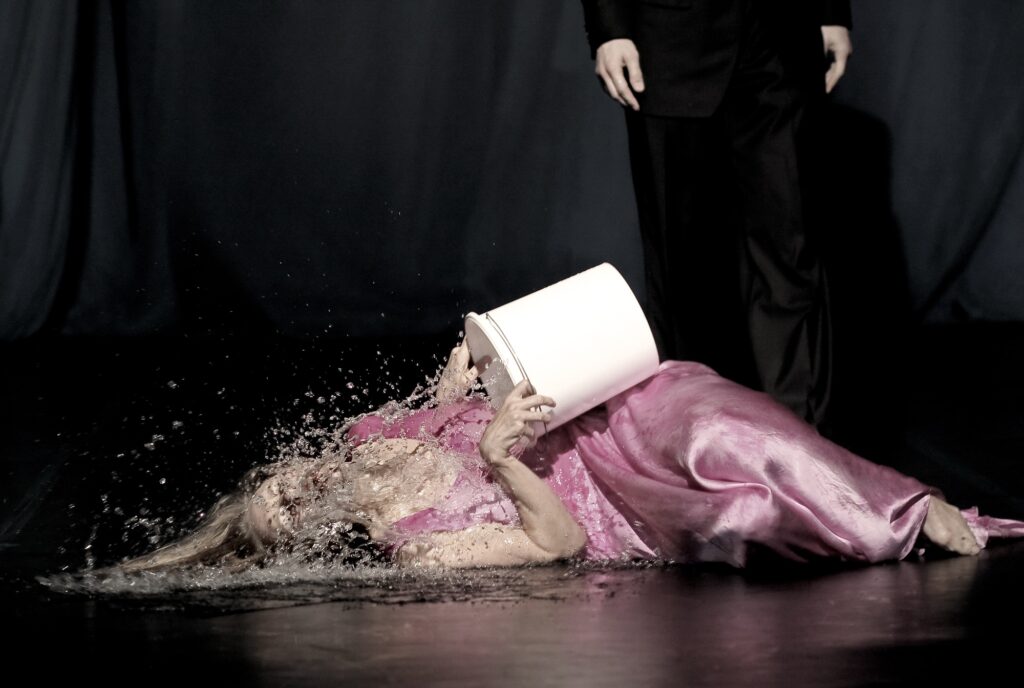
I stifle a little bit when I think of Pina’s work as a legacy only because it feels so alive when you see it, perhaps compared to the work of other choreographers. As we enter an era where the pieces are entering the repertoire of other companies, is this something you’re keen to see? A sort of spreading of Pina’s gospel.
I think that once a dancer understands how deep Pina’s work is, how you can open so many different channels inside yourself as a performer, then you become a Pina addict. Because it’s always the unknown coming up, which is great for an artist. Even before being with Pina I danced Tanztheater with Reinhild Hoffmann, I’ve danced German Tanztheater over 40 years. The mystery is still coming of the next performance. What will I find out in that next performance about myself? How will I react with the audience, how will I connect with my colleagues? It’s all open. And that is the beauty with Pina.
Even when you learn the steps over and over again, like in something like ‘Sacre du Printemps’, you drill those movements. When you get out on stage everything is open. The experience begins. In that experience you are literally living in the moment and you are relying on your intuition. So there’s this huge freedom in her work you can’t describe until you’ve done it. Even if that freedom is bound by a very specific aesthetic there is something so alive inside you that you feel that you’re inventing it straight away, right now.
Coming back to Sweet Mambo, and maybe this is a bit of a clichéd question, but what is it that you want these new audiences in London to take with them?
There are so many words that we use so often, we hear words more now because we have the internet. I would say humanity, connection, beauty, they’re kinda cliché but I mean them. The thing is there is a fragility, a vulnerability, a strength, a beauty, a connection with the people who are watching. I feel we are one when we are dancing, we are one with the audience. I feel that we pass energy over and they pass energy. It’s this flow of energy, this connection that passes between the whole room. The whole room becomes one, the stage doesn’t separate us. We are in exchange with one another, perhaps with something that remains unspoken, maybe it’s not right to speak about what we exchange.
Afterwards, people go out having felt something, or talk about something they saw. One person once said to us after seeing Masurca Fogo, “I felt like I loved everyone a little bit more when I left the theatre”. That’s great, you know what I mean? Just to have something that makes you open up a little, even if it’s something you don’t like. I feel that we communicate, that’s what we want to do.
We communicate by seeing something aesthetically astounding because what Pina made was amazing. We see age on stage, I find that incredibly important, but we also see youth on stage. We see something that’s funny, something that’s tragic, we see a lot of longing. We see warm feelings, cold feelings, I don’t know. As long as you’re feeling something, that is what we want.
Sweet Mambo runs at Sadler’s Wells, London from 11-21 February. Book here.