Words by Lizzy Tan
Resolution festival’s lineup on 11 February showcased work from seasoned performers across the UK’s diverse dance landscape. Rachel Elderkin’s Hours created an ambient world to draw attention to the beauty of slow transformations. Citizens of Grief by Wayward Thread delivered a gut-punch of gallows humour and devastating vulnerability. In Before the After, Taylor Lauren Hughes broke the fourth wall, transporting us to a frenetic dreamscape.
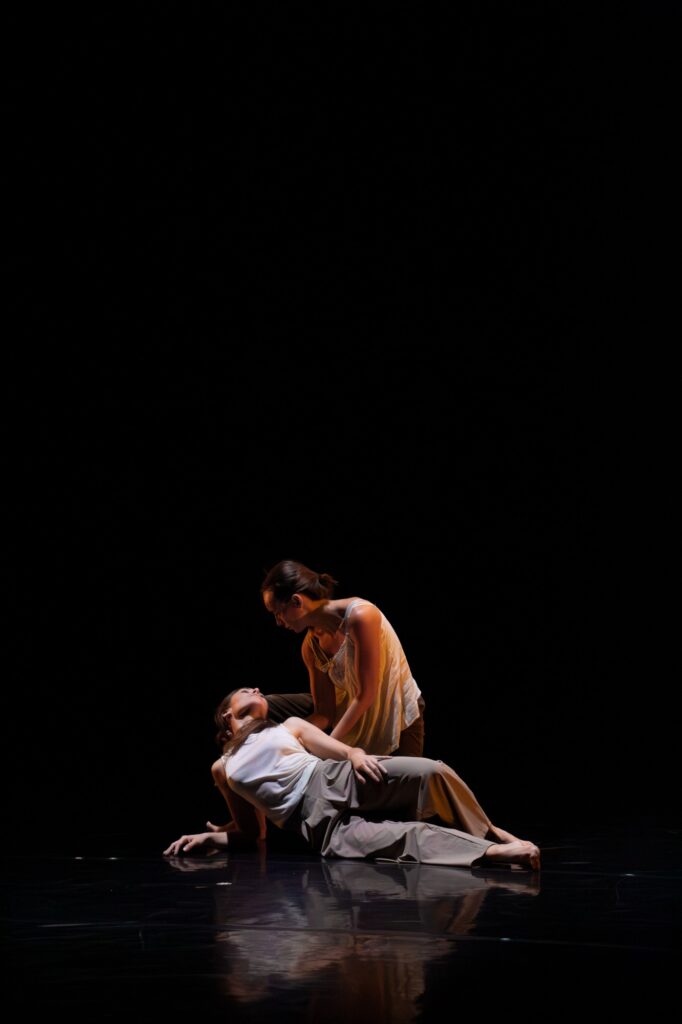
Hours begins with two dancers (Rachel Elderkin, Sara Augieras) embracing, then separating under a dim spotlight. They are illuminated in a series of spare vignettes, holding poses and each other. The sound of waves and spoken word poetry score this progression. The dancers are dressed in loose, cream tanks and sand-coloured trousers which flutter as they move across the stage. A repeating phrase (‘We are lost. The sand stretches on…’) creates an ambience for the piece. It’s trance-like. The duo repeat the series of poses again, faster and twisting around each other. Their nimble partnering is their strength – it is clear that Elderkin and Augieras are seasoned dance partners, and the lifts are smooth and well-coordinated. As the duet progresses, the negative space between the performers widens, adding a pleasing visual element. This intensity culminates in an extended moment of stillness: the performers lie belly-down on stage, breathing. This elongated pause is a smart palate cleanser within a cyclical, atmospheric work. Hours presents more of a mood than a concept, something like the pull of a low tide – gradual, gentle and perpetual transformation.
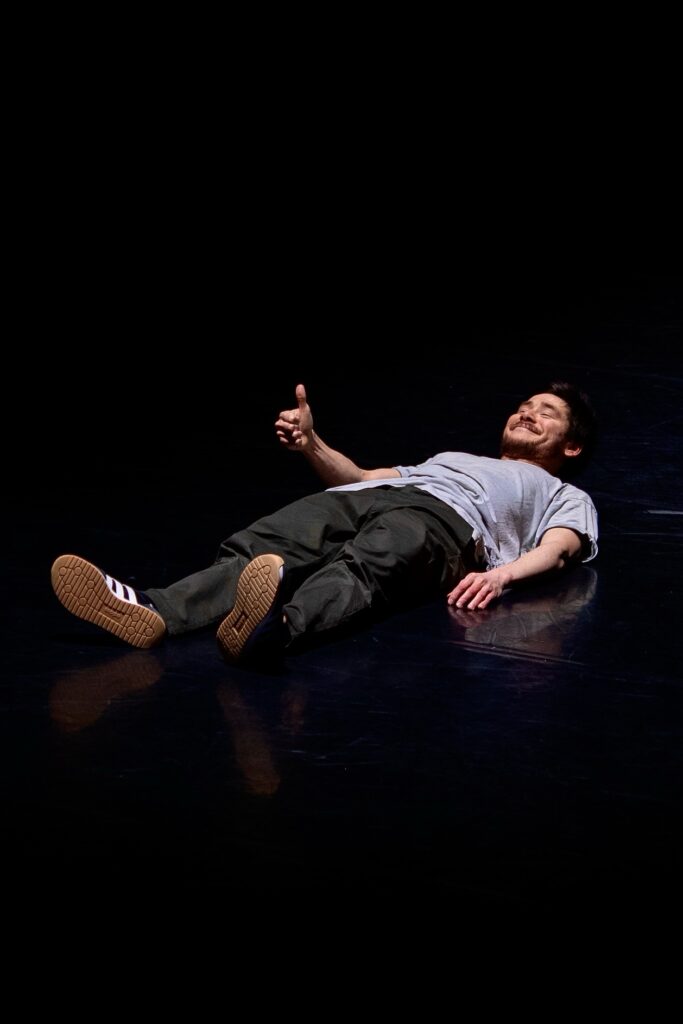
Wayward Thread’s (Si Rawlinson) Citizens of Grief is a masterclass in contemporary dance theatre. What at first seems like an abstract exploration of South Asian music becomes a much more personal testimony about family dynamics, chronic illness, mortality and acceptance. Rawlinson demonstrates a diverse movement vocabulary through agile movement vignettes, each framing a darkly humourous anecdote. We are privy to childhood experiences as a medical ‘curiosity,’ struggles with commitment and questions about parenthood. Throughout, reactions are extended into dance. Rawlinson repeatedly clasps his side; his limbs reach, snakelike, away from his torso before abruptly stopping – there’s something he’s not able to say. As a comic, Rawlinson brings caustic irreverence; he succeeds because he’s not afraid to make himself the butt of the joke. This self-awareness is an excellent complement to his heartfelt, at times heartwrenching, reflections: he’s already outlived his life expectancy, so what now? A fulfilling, dramatic solo finally arrives—uninterrupted, Rawlinson dances like he is getting something off him. It’s a satisfying metaphor for a good confession: when he gets it off his chest, we do too.
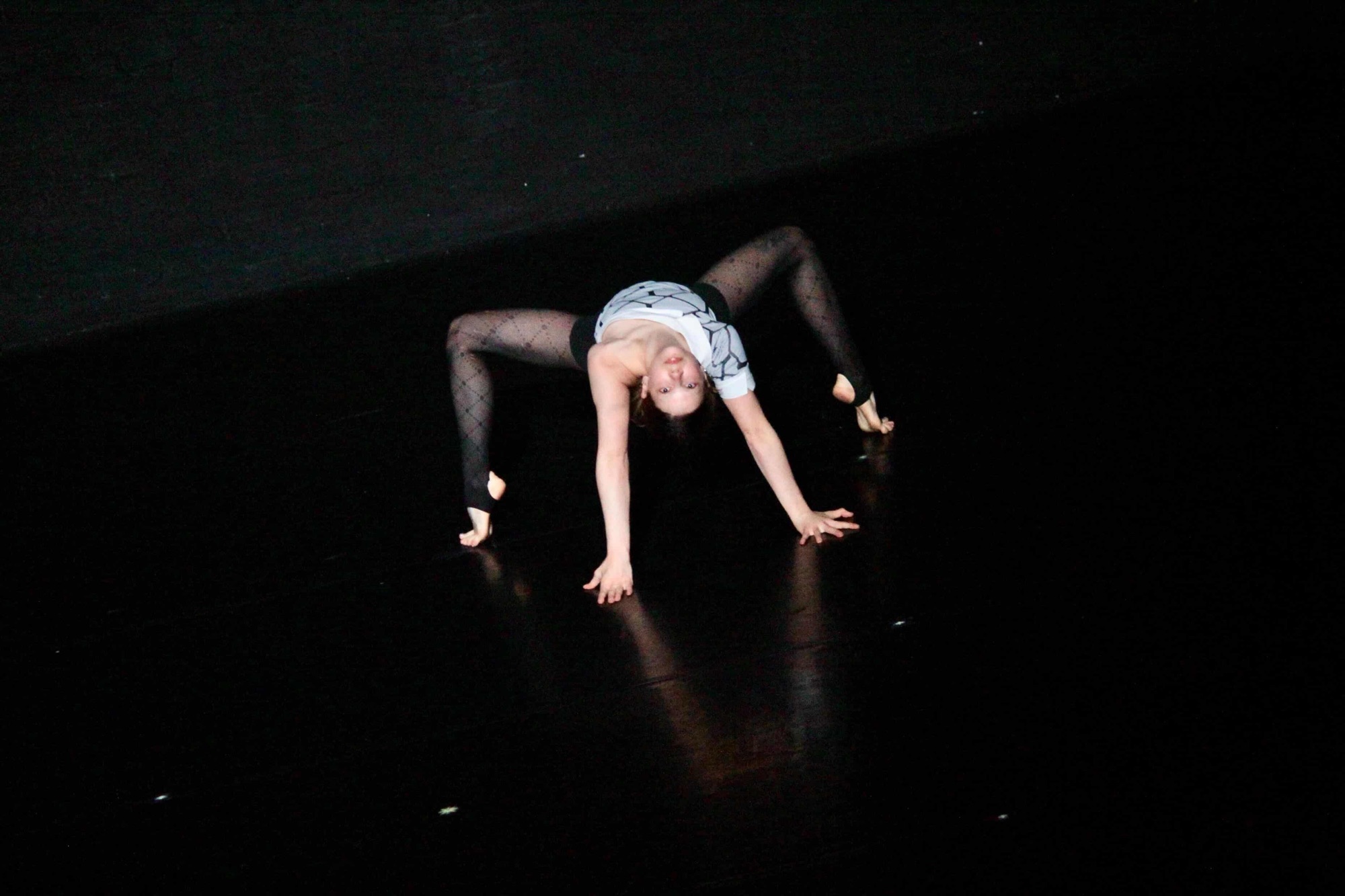
Taylor Lauren Hughes presents a celebration of the strange in Before the After. The piece begins with a performer picking something off the ground, effectively plunging us into the frenetic, circus-like atmosphere of Before the After. The piece reads like a cabaret, with each act driven by one or two characters and a supporting ensemble. There is contortion, a unicorn, spidery creatures, all conducted with a definitively playful tone. The magic of the piece is in its transitions: solos blend and merge into each other with inventive, entertaining mini-scenes. Dramatic lighting choices support the high energy of the work. One ‘fight scene’ is a particular highlight, all camp and fluid partnering. Near the end, all the characters gather in a grand ensemble and the piece ends as it began, returning us back to our world. A fever dream in the best way.
Header image of Before the After.