Words by Maxime Swift.
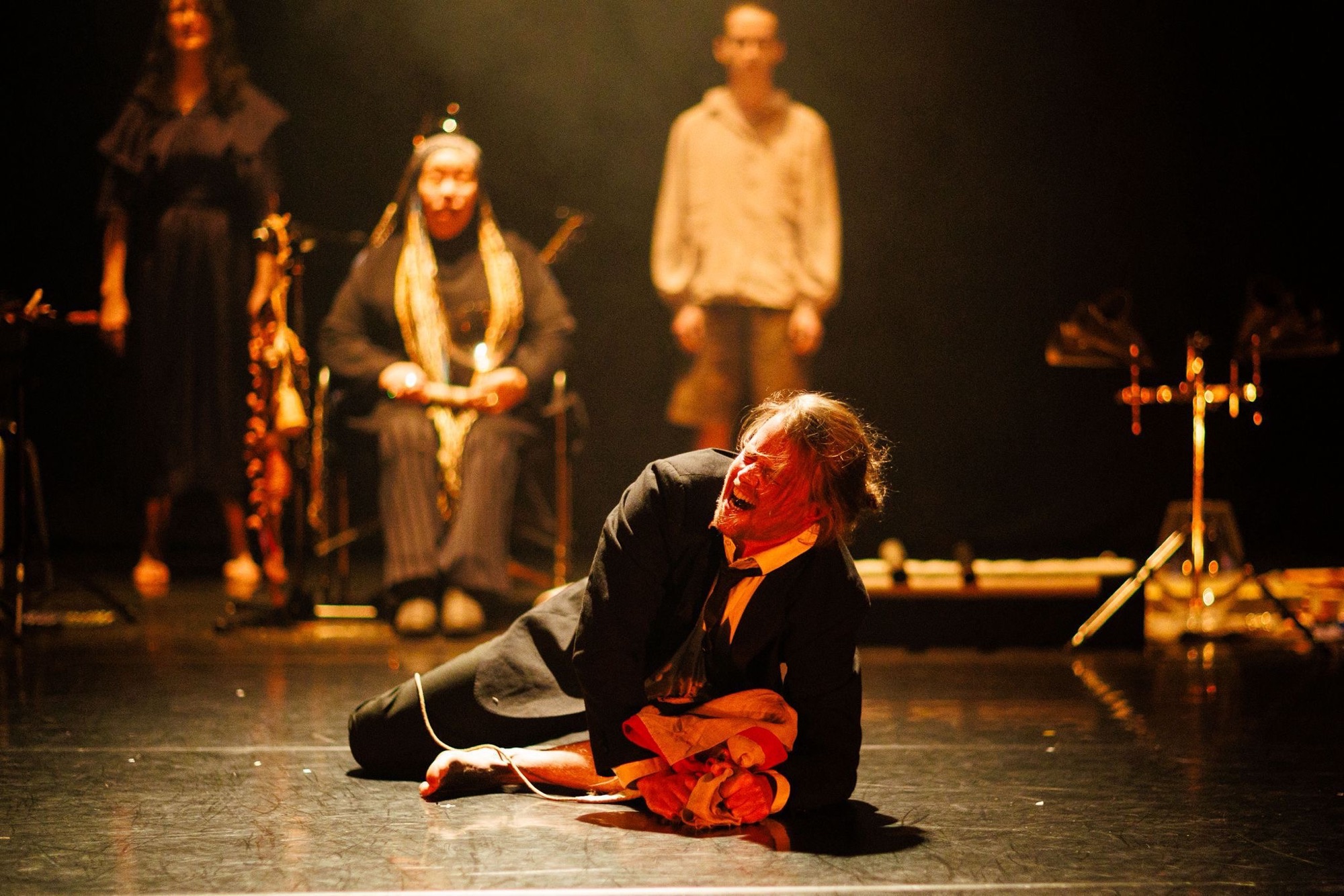
As the performance begins, a knight in once-shining armour walks stiffly onto the Dance City stage. He takes a seat at a small table overflowing with unanswered mail. As he struggles to open bill after unpaid bill, cast members discreetly strip him of his armour, carefully removing it piece by piece. When all is gone, a transformation is complete: the audience can see a man in a dishevelled suit, sobbing. He slowly slumps and lies on the stage floor, cradling a tattered St George’s Cross flag as he cries.
This is the opening of The Guest (Se Gæst in Old English), Anthony Lo-Giudice’s newest production that attempts to portray ‘England’ and its many pasts and presents. Ostensibly, this performance follows the story of a boy who washes up on a Tyneside beach and the local community’s reactions to him. However, this sits alongside a tableau of dance and music that explores British identity in a more subtle, outward-looking way. The scoring is particularly impressive, with a mainly percussive band including a marimba and steel pans; these instruments have their own long and complex history in relation to ‘Englishness’.
The dancing, especially in the first half once weeping George leaves the stage, is incredible: choreographed movement that seems to flip the world on its head. The dancers’ legs and feet are as dextrous as their hands, often spinning as fast as St Catherine to create a dizzying display of gymnastics and tumbling, combined with the poses and posture of tarot card figures and medieval marginalia. This truly encapsulates the meaning of the weird and the wonderful.
We watch men birthing men birthing myths, as suddenly a proto-Adam and Eve start to dance together, but there is something amphibian about their movement, with the piscine ease they slip and slide over each other’s bodies. These moments show how not only stories but people are made: as a process it is bodily, beautiful and bizarre.
Lo-Giudice is engaging with big concepts like ‘folk’, ‘identity’, ‘nationhood’ and ‘belonging’ through the music, puppetry, dance and The Guest’s script. He is most successful in this when the themes themselves have enough room to breathe and thus expand. The instrumental elements of the score succeed in this, as does the dance.
The central plotline depicts anti-migrant attitudes, the kind of comments oft overheard regarding who is and isn’t welcome here. These remarks, some as simple as the single expletive “fuck off”, are layered throughout the performance, but the effect for me was not amplification. Whilst definitely making a point, the repetitiveness did not necessarily help encourage the audience to think more about the pervasiveness of these nationalist sentiments that are creeping up on us.
Could discomfort be explored through pauses, awkward silences, and letting words linger; their metaphorical echo amplifying across the space they are given? By rushing or over-delivering these comments it can dampen their violence. Humour can be a real source of clarity and a useful theatrical tool for excoriating society as the arts navigate how to engage meaningfully in politics, but I am not wholly convinced the jokes in The Guest quite succeeded in this.
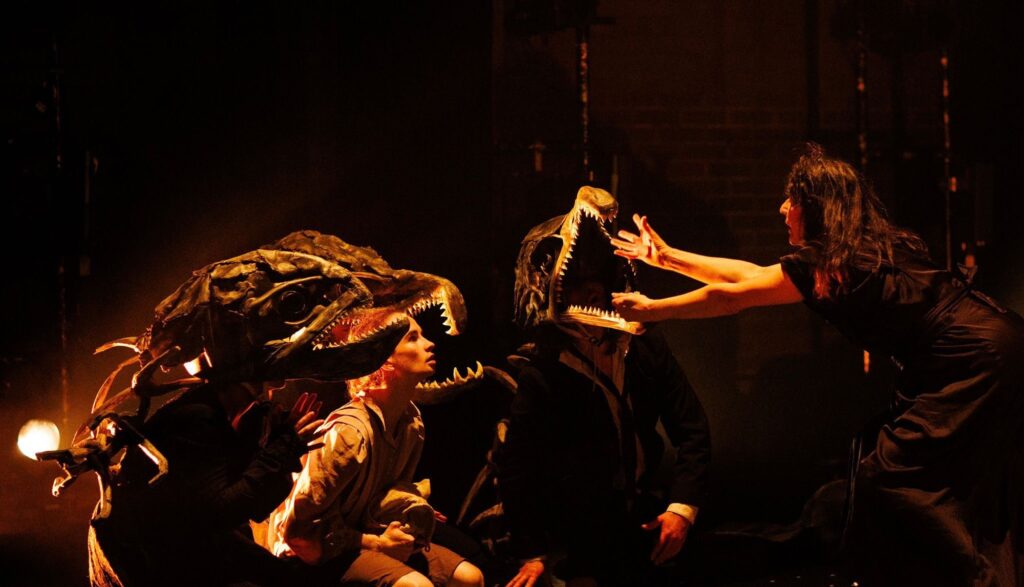
The sinister and rapid rise of nationalism and racism in the UK today is deeply concerning, and as a choreographer deeply rooted in the North East, Lo-Giudice is intensely aware of increasing tensions within the population, which we have seen reach a boiling point with the anti-immigration riots last summer in both neighbouring Sunderland and Middlesbrough. During the work’s creation process, a number of conversations were had with different communities about national identity.
Through The Guest, I did not doubt for a second his desire to depict and condemn anti-immigration rhetoric and bigotry present in society, but it is a challenge to deliver this to audiences.
Ultimately, this is a dance with two stories. The first is a rather trite depiction of the politics and beliefs that many hold across the country today, and the other, burrows into the thicket of English folklore and history to discover a less neat but deeper portrayal of how our relationship with nature, magic and stories impacts our relationships to one another and the perceived Other in contemporary society.
I would have been interested in an even deeper look at folk practices, as they have their own thorny history of being rituals for expelling outsiders from rural communities, a link that could have connected the two threads of the work. St George himself, after all, was a Palestinian man and the symbol of his cross is used across the world for many to celebrate his bravery in standing up for persecuted people.
This review has been edited after publishing.