Words by Maxime Swift.
October – the macabre month – was a fitting time to see FRANK by Cherish Menzo. At the start of the performance (as part of Take Me Somewhere festival) once the audience is seated round the thrust stage, like Enlightenment-era physicians in an anatomy theatre, Menzo and her fellow performers announce that what we are about to see is “a concoction of imaginations mounted on the frightening”. We the audience are being prepared for a confronting look at who the real monsters are.
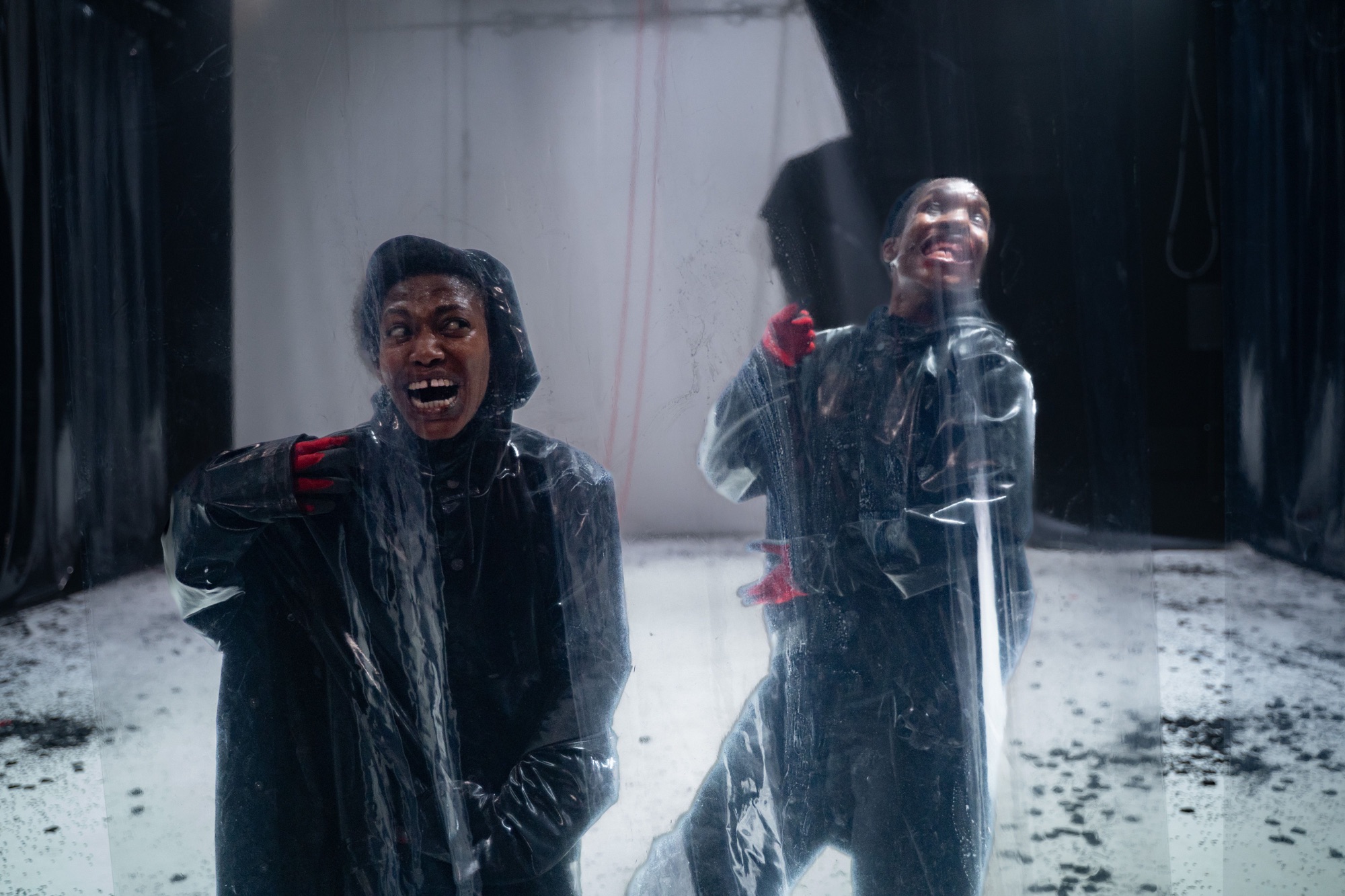
Menzo uses classic horror images in her choreography: twitching movements, clawed fingers, and maniacal grins. The dancers strike the archetypal wide-eyed wide-mouth pose bringing their hands to their faces, from Edvard Munch’s paintings to Drew Barrymore in the movies, we know a scream when we see it. The soundtrack also takes a leaf out of Hollywood’s book – there are ominous drones and high-pitched string shrieks, sounds that spike your heart rate. The movement ranges from stalker-slow to jerky and spasmodic. On the back wall projections zoom in on a bloodshot eye and a mouth wide open. However, Menzo does not only do horror in conventional ways. No, a key part of FRANK is the breakdown of these images and tropes, and how through the reshuffling and distortion of these we can start to unpick something far scarier.
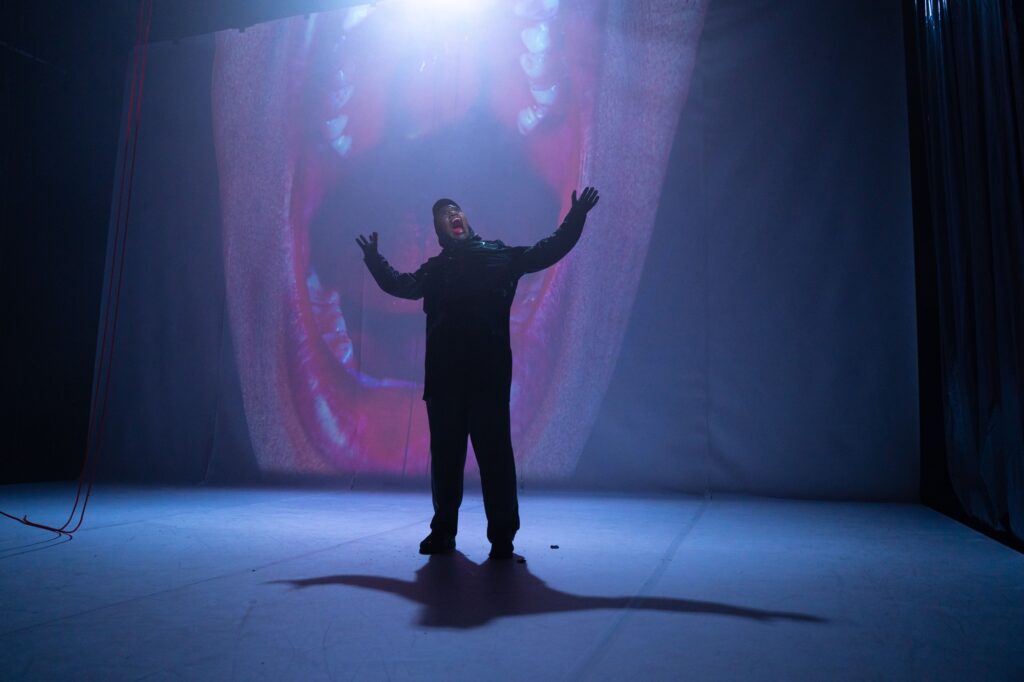
The real fright comes in the breaking of the fourth wall – there is no longer a clear us and them, audience and stage, we and the Other. A performer steps out from the stage, smiling and addressing an audience member directly, smiling sweetly and asking, “Did you really expect me to just stay in there?” There is something threatening in this saccharine decorum. The tension rippling through the audience is palpable: politeness, stifled laughter, smiles – this geniality is disguising cold, hard fear. The facade cannot be maintained; things start to fall apart. No one wants to budge out of their safe role as audience member, as one who looks on, watching and definitely not participating. As Menzo prowls round the seats, engaging people in conversation, or at least trying to, the theatre itself feels like its disintegrating. There is a leak in the roof, the set starts to peel and fall, mass disruption is taking place.
There is both re- and de-composition at play here. As the four storm round the stage, they jostle and bump into each other, movements are transferred and reimagined. With each movement the arms and bodies of the dancers shed what looks like dirt, tiny dark flecks, as if they are falling apart before our very eyes. In their black anoraks gleaming menacingly in the misty light, they patrol the stage, falling into a single file march like old-school bobbies in London fog. The authority of their costume is undermined by their movement – exaggerated and ironic, one dance leans far, far back as they stomp round stage, whilst another tries to maintain their march as they crouch lower towards the floor. This movement, in contrast with the following dance inspired by Winti rituals performed by enslaved people in Suriname, demonised by the Dutch, is a stark contrast. Through dance, Menzo is able to hold together the oppressor the oppressed, picking and mixing movement motifs from each other’s repertoires to blur the line between the traditionally othered and those in control of the narrative.
This is all about power. In the theatre, who is in charge? Is it the audience, with their safety in numbers, or is it those on stage, those commanding the attention of the silent onlookers? Cherish Menzo and her fellow performers are wrangling for control, to reclaim the narrative and confront the history of the gothic monster. FRANK (short for Frankenstein) explores this archetype and demonstrates how these old racist ideas still loom large in the racialised images and ideas surrounding the monster today. The performance text, performed polyphonically in both English and French (languages of Imperialism), seeks to confront the audience and show the harrowing experience of what it feels like to be Othered, to be made ‘monstrous’. In the opening reading, each performer rolls the word “propre” round their mouth, tasting ownership as if for the first time. This tentative reclamation turns into a full-blown riot across the duration of the play – as the stage falls apart, they chant “it’s me, not you, but me, me the Other, capital O, small o, I take the capital letter”. This emancipatory cry feels tainted when the performers later announce “our need for recognition complies with the killing machine” – taking back control of one’s own narrative can feel impossible when the gaze of the oppressor is still felt. Like a monster, it has sunk its claws in and is hard to shake off.
It’s confronting, and Menzo knows this, there are lulls and quieter moments of song and stillness to let it all sink in. The pacing of FRANK works brilliantly, drawing the audience up in its crescendoing frenzies and quieting things back down for the end: a tender, heart-wrenching rendition of Faya siton, a Surinamese song that sounds like a nursery rhyme in its melody but as the translation of the lyrics become the backdrop of the destroyed stage, the brutal reality that this song memorialises becomes clear. Now, as the production ends, it is up to the audience to bear the weight of these monstrous acts which cannot and should not be ignored or forgotten.